• Skip to secondary menu
  • Skip to main content
  • Skip to primary sidebar

Eat Out Eat Well

  • Home
  • About
  • Eats and More® Store
  • Books
  • Contact

Why Is A Carved Pumpkin A Jack-o’-Lantern?

October 17, 2012 By Penny Klatell, PhD, RN Leave a Comment

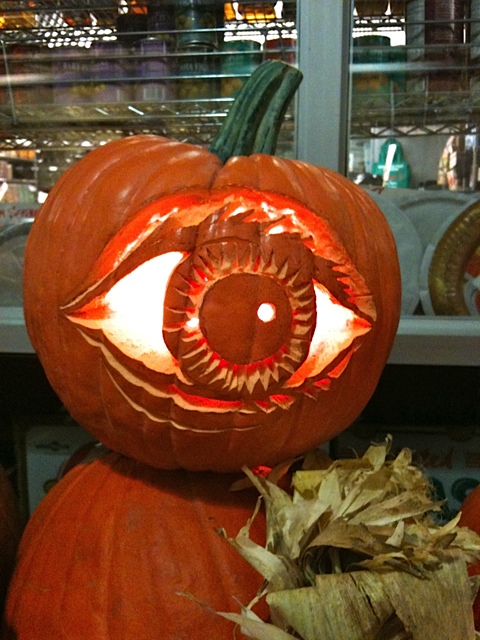
Jack-O'-Lantern with carved eye
Jack-O’-Lantern

The Legend of The Jack-O’-Lantern 

As the story goes, there was a miserable old drunk named Stingy Jack.   He liked to play tricks on his family, friends — even the Devil —  and he tricked the Devil into climbing up an apple tree.   Once the Devil was up in the tree, Stingy put crosses around the apple tree’s trunk so the Devil couldn’t get down.  He then told the Devil that if he promised not to take Jack’s soul when he died he would remove the crosses and let the Devil down from the tree.

When Jack died, Saint Peter waiting for him at the pearly gates of Heaven, told him that he couldn’t enter Heaven because he was mean, cruel, and had led a miserable and worthless life. So, Stingy Jack then went down to Hell but the Devil wouldn’t take him in either because of what Jack had done to him.  Jack was scared and with nowhere to go he had no choice but to wander around in the darkness between Heaven and Hell.

Stingy Jack asked the Devil how he could stop wandering around without a light to see.  The Devil threw him an ember from the flames of Hell. One of Jack’s favorite foods, which he always had when he could steal one, had been a turnip.  So he put the ember into a hollowed out turnip and from that day on, Stingy Jack, without a resting place, roamed the earth lighting his way with his “Jack-O’-Lantern.”

And so goes the legend of the Jack-O’-Lantern that dates back hundreds of years in Irish history.

Halloween And The Jack-O’-Lantern

Halloween, or the Hallow E’en as it’s called in Ireland and Scotland, is short for All Hallows Eve, or the night before All Hallows.  On All Hallows Eve the Irish made Jack-O’-Lanterns by hollowing out turnips, rutabagas, gourds, potatoes, and beets and then putting lights in them to keep away both the evil spirits and Stingy Jack.  In the 1800′s when Irish immigrants came to America, they discovered that pumpkins were bigger and easier to carve, and the pumpkin became the Jack-o’-Lantern.

If You Want To Eat Your Pumpkin . . .

Jumping from legend to fact:  pumpkins are Cucurbitaceae, a family of vegetables that includes cucumbers and melons. They are fat free and can be baked, steamed, or canned.

One cup of pumpkin has about 30 calories and is high in vitamin C, potassium, dietary fiber, and has other nutrients such as folate, manganese, and omega 3′s.  Pumpkin is filled with the anti-oxidant beta-carotene, which gives it its rich orange hue. It’s versatile and can be added to baked goods and blended with many different kinds of food. When pureed pumpkin is used to replace some or all of the fat in baked goods, it significantly decreases the calories while keeping the cake, muffin, or other baked good moist.

Pumpkin seeds are delicious and are a good source of iron, copper, and zinc.  Although pumpkin flesh is low in calories, pumpkin seeds are not.   They have 126 calories in an ounce (about 85 seeds) and 285 calories in a cup.
Filed Under: Food for Fun and Thought, Holidays, Shopping, Cooking, Baking Tagged With: Halloween, holidays, jack-o'-lantern, pumpkin, pumpkin seeds

The Chinese Takeout Container Is Really An American Oyster Pail

October 11, 2012 By Penny Klatell, PhD, RN Leave a Comment

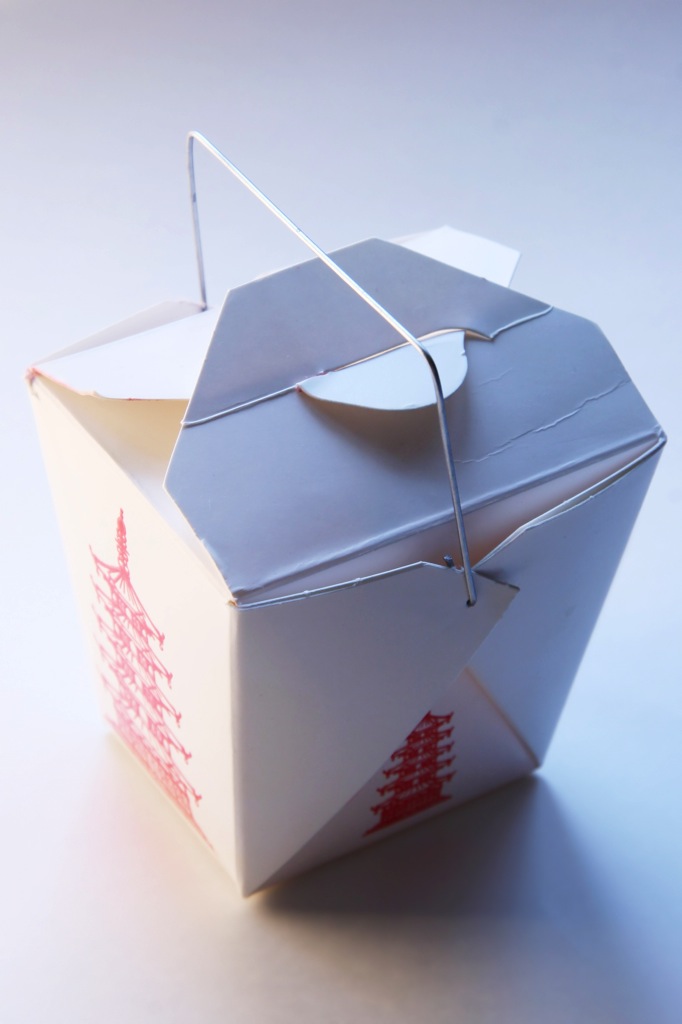
You can probably find Chinese take-out food in white containers with wire handles in just about any part of the United States and in many other parts of the world.

Although those folded white paperboard containers immediately signify the type of food that’s inside, their derivation is, well, American.

It’s Really An Oyster Pail

The Chinese takeout container was patented in Chicago, on Nov. 13, 1894, by Frederick Weeks Wilcox.  He created a “paper pail” from a single piece of paper that was creased into segments and then folded into what was, hopefully, a leak-proof container with a wire handle on top. The support folds were on the outside — creating a flat inside surface which made it pretty easy to slide food smoothly onto a plate.

The whole idea was based on an oyster pail – a wooden pail used to transport oysters.  The paper oyster pail was developed when oysters, which were very popular and used to be more plentiful and less expensive than they are today, were shucked by an oyster seller when they were purchased. The raw oyster meat was then taken home to be used in cooked dishes. Because shucking oysters requires some amount of skill to avoid badly cut fingers, having someone else do this was a good thing.  So, after the oyster seller wrestled the shells open, the dripping oyster meat that was removed had to be transported in something.  The paper oyster pail proved to be an inexpensive and sanitary way to do this.

Takeout Food Becomes Popular

After the Second World War, Americans developed a huge interest in prepared food that could be picked up from restaurants and heated up at home. Because it’s tasty, a little different, pretty cheap, and travels well, American Chinese food became very popular.

The Adaptable White Box

When oyster availability started to decline and Chinese takeout food started to become popular, the nearly leakproof, durable, disposable, inexpensive, and  available oyster pail was quickly adopted for “Chinese take-out.”

And, for good reason.  The design of the box is multi-purpose.  It usually self-closes with a tab and because of the way the box is folded, it allows some steam to escape from hot food. If you’re careful, you can remove the flaps, unfold the sides, and use the container as a flimsy plate.

Over time, some adjustments have been made in the boxes that make them more suitable for the modern-day kitchen: you can find microwave-safe cartons that use glue instead of wire along with dye free and unbleached environmentally friendly varieties.

But, one thing has not changed.  As most takeout food lovers know, one of the best things about the uniquely shaped box is that with the long reach of chopsticks you can still eat right out of the container.


Filed Under: Food for Fun and Thought, Takeout, Prepared Food, Junk Food Tagged With: Chinese takeout food, Chinese takeout food box, food facts, food for fun and thought, takeout food, takeout food container

Protein: Have You Ever Wondered How And Why It Fills You Up?

October 3, 2012 By Penny Klatell, PhD, RN Leave a Comment

Protein Really Does Help You Feel Full, But Why? 

According to the September 2012 Tufts University Health & Nutrition Letter,  French researchers published the findings of a study that confirms that dietary protein affects satiety – the feeling of being full and satisfied — something that a lot of people seem to know but that hadn’t previously been explained. The researchers found that there’s a chain reaction of signals between your brain and your digestive system that explains why this happens.

Why Does Protein Make You Feel Full?

When you eat and start digesting dietary protein, it stimulates activity of molecules called mu-opioid receptors, the same receptors that are responsible for your body’s reaction to morphine. As the protein is being digested, the receptors send signals to your brain, which then tells your intestines to release glucose. As your glucose (blood sugar) levels start to rise, both your hunger and your desire to eat starts to get suppressed.

How Much Protein?

The good news is that most of us, barring certain problems, usually meet or exceed our protein requirements. Protein is a very common part of a lot of the foods that we eat — especially if you’re eating a pretty varied diet. Most Americans get about 12-18% of their calories from protein sources.

Every cell in our bodies contains protein – with the exception of bile and urine. Our bodies need that protein to form new cells, repair old ones, and build and maintain muscles.  People with medical issues may have different protein needs and research is showing that protein intake in older adults may help with frailty.

What Are Good Sources Of Protein?

A gram of protein has four calories but the problem is that a lot of our dietary protein comes from large portions of animal sourced foods — like fatty meats and full fat dairy — and not from lean meat, fish, beans, and certain vegetables and whole grains.

The National Academy of Medicine says that most adults can meet their daily need for protein with two to three servings of protein rich food.

Recommended servings might be:

  • 1/2 cup of cooked dried beans
  • One ounce of cheese, two tablespoons of peanut butter, or one egg
  • Two to three ounces (about the size of a deck of cards) of cooked poultry, lean meat, or fish
  • Two to three ounces of soy protein (such as tofu or soybeans).
  • An egg is almost a perfect protein source. One large cooked egg has more than six grams of protein and about 70 calories.

Good vegetable protein sources are: black, pinto, garbanzo, and kidney beans; split peas; peanuts and peanut butter; sunflower seeds; nuts; and soy products.

Animal sources might be:  skinless poultry; bosom; lean cuts of beef and pork trimmed of visible fat; fish and shellfish; and low or non- fat dairy products.


Filed Under: Calorie Tips, Healthy Eating, Food Facts, Food for Fun and Thought, Manage Your Weight Tagged With: calorie tips, food facts, food for fun and thought, food sources of protein, protein, satiety

Why Your Mindless Bites Are Making Your Jeans Tighter

September 28, 2012 By Penny Klatell, PhD, RN Leave a Comment

Are your pants feeling a bit tight and you can’t figure out why?

It’s those mindless bites that will get you.  Each one of those “shove it in your mouth without thinking about it” bites is worth about 25 calories.  Do the math.  If you have four mindless bites a day above and beyond your daily calorie needs that means possibly gaining slightly less than a pound a month (it takes 3500  calories to gain a pound  — and yes, you need a deficit of 3500 calories to lose a pound).

Do You Do Any Of These?

  • Snag a piece of candy from the bowl on someone’s desk
  • Scoop the last bit of leftovers from the pot into your mouth
  • Taste the cookie dough batter then lick the beaters
  • Finish the crust off of your kid’s grilled cheese sandwich
  • Sample the bar food while having a drink
  • Taste the free “want to try” foods when you’re shopping
  • Have “just a taste” of your friend’s or spouse’s dessert
  • Eat the freebie cookies or candy that come with the check in restaurants

Twenty-five

Ouch!  Each bite adds up to — on average — 25 calories (sometimes more, sometimes less).

Be aware of what you’re eating – especially when you’re not really eating.  Most of us don’t have a clue how many calories – or even bites – we’ve shoved into our mouths at times other than meals.  Unfortunately, all of those calories that we eat when we’re not eating meals not only count but add up to those pounds gained — and you can’t figure out why you gained them.

What To Do

Keep track of when and where you’re most likely to indulge in the mindless bites you shove down the hatch while you’re walking, talking, socializing, working, and driving.

The most effective method is to try to write down what you eat.  That may be a pain but might serve as a real “heads-up” because a written record is hard to deny.  If you don’t want to write it down (I must admit I have trouble doing that) at least be aware of your mindless bites – and decide if you want to eliminate, control, or include them in your daily calories.

Awareness is a good thing — especially if it makes your jeans fit better.

Filed Under: Calorie Tips, Healthy Eating, Food Facts, Entertaining, Buffets, Parties, Events, Food for Fun and Thought, Manage Your Weight, Snacking, Noshing, Tasting Tagged With: calorie tips, calories, calories in mindless bites, food for fun and thought, foodmap, mindless botes, mindless eating

What Are Your Eating Triggers?

September 25, 2012 By Penny Klatell, PhD, RN Leave a Comment

Is it almost a foregone conclusion that you’ll stuff yourself to the gills when you go home to your parents’ house for holidays or other events?  Is it almost impossible for you to navigate your office without stopping at the snack room and the receptionist’s desk to sample the never-ending array of holiday specialties or someone’s birthday cake?  What about the routine lunch for a not-so-good friend that makes you go home and eat a pint of ice cream?

Know Your Triggers

Most of us can name situations that make us want to eat.  Sometimes it takes  dedicated thought to precisely identify what it is that starts the cascade of events that leads to not just wanting to eat, but the feeling that you absolutely must have a particular food — sometimes in large quantities.  Keeping a food journal where you record not only what you ate but the environment and what was going on while you were eating can help you identify the causative factors.

Sometimes those triggers are big red flags – for instance you know that having a piece of pecan pie — or any other sweet food for dessert at lunch will trigger nibbling on candy at the office the rest of the afternoon. But do you eat it anyway?

Or, do you intentionally go to store A instead of store B for a cup of coffee because you know store A always has lots of free samples of freshly baked cake and cookies?  Do you know that if cookies are in the cupboard and ice cream is in the freezer that you will sooner, rather than later, eat it?

Which Foods And Environments Are Your Red Flags?

Be honest 
with yourself and admit that certain foods and environments are red flags for you.   I know that I can’t have cookies in my house and I also know that I tend to overeat at family events.

There’s no reason to psychoanalyze why certain foods or situations act as your triggers.  Just know which particular things serve as your red flags — your triggers — and have strategies in place to deal with them.

Filed Under: Calorie Tips, Healthy Eating, Food Facts, Eating on the Job, Eating with Family and Friends, Manage Your Weight, Snacking, Noshing, Tasting Tagged With: calorie tips, eating triggers, food journal, food triggers, healthy eating, overeating triggers, weight management strategies

  • « Go to Previous Page
  • Go to page 1
  • Interim pages omitted …
  • Go to page 66
  • Go to page 67
  • Go to page 68
  • Go to page 69
  • Go to page 70
  • Interim pages omitted …
  • Go to page 131
  • Go to Next Page »

Primary Sidebar

Recent Posts

  • Buy Me Some Peanuts And Cracker Jacks
  • Is Your Coffee Or Tea Giving You A Pot Belly?
  • PEEPS: Do You Love Them or Hate Them?
  • JellyBeans!!!
  • Why Is Irish Soda Bread Called Soda Bread or Farl or Spotted Dog?

Topics

  • Calorie Tips, Healthy Eating, Food Facts
  • Eating on the Job
  • Eating with Family and Friends
  • Entertaining, Buffets, Parties, Events
  • Food for Fun and Thought
  • Holidays
  • Lose 5 Pounds in 5 Weeks
  • Manage Your Weight
  • Restaurants, Diners, Fast Food
  • Shopping, Cooking, Baking
  • Snacking, Noshing, Tasting
  • Takeout, Prepared Food, Junk Food
  • Travel, On Vacation, In the Car
  • Uncategorized

My posts may contain affiliate links. If you buy something through one of the links you won’t pay a penny more but I’ll receive a small commission, which will help me buy more products to test and then write about. I do not get compensated for reviews. Click here for more info.

The material on this site is not to be construed as professional health care advice and is intended to be used for informational purposes only.
Copyright © 2026 · Eat Out Eat Well®️. All Rights Reserved.