• Skip to secondary menu
  • Skip to main content
  • Skip to primary sidebar

Eat Out Eat Well

  • Home
  • About
  • Eats and More® Store
  • Books
  • Contact

Holidays

Jelly Beans: Little Nuggets of Sweetness

April 1, 2014 By Penny Klatell, PhD, RN Leave a Comment

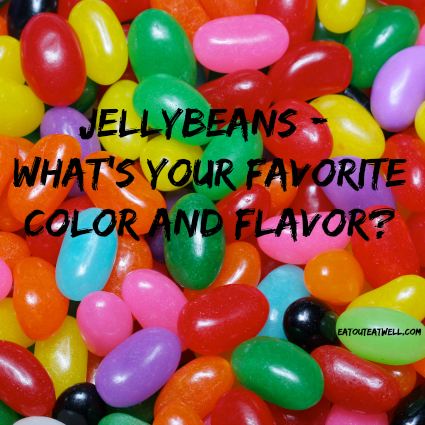
jellybeansDo you think a bag of jellybeans should come with a warning label:  “STOP NOW or you’ll keep eating until they’re gone?”

It’s pretty darn hard not to love those little nuggets of sweetness that come in multitudes of colors and flavors and get stuck in your teeth!

Americans eat 16 billion jellybeans at Easter – if they were lined up end to end they would circle the earth nearly three times.

Where Did Jellybeans Come From?

The gummy insides of jellybeans are thought to have originated from the centuries old treat, Turkish Delight. Jellybean outsides are just like the colored hard candy coating, developed in the late 17th century, for the Jordan almond.

The modern jellybean became popular during the American Civil War when Boston’s William Schraft encouraged citizens to send candy to Union soldiers.  Jellybeans were the first bulk candy and they became one of the staples of the penny candy that was sold by weight in the early 1900s. Because of their egg shape, which can be taken as representing fertility and birth, they became popular as Easter candy around 1930.

Standard jellybeans come in fruit flavors but there are now a huge number of flavors like spiced, mint, tropical, popcorn, bubble gum, pepper, and cola.  They also come in a sugar free version (seems weird, but true – don’t you wonder how many chemicals are in those?).

Teenee Beanee jelly beans and Just Born jellybeans are Pareve & O/U; Jelly Bellies are certified OU Kosher.

Do You Eat Them By The Handful Or Pick and Choose?

Do you eat your jellybeans one at a time, or do you gobble them up by the handful?  What about colors and flavors – do you pick out your favorites or just eat them altogether?

  • 70% of kids aged 6–11 say they prefer to eat Easter jellybeans one at a time
  • 23% say they eat several at once
  • Boys (29%) are more likely to eat a handful than girls (18%)
  • Kids say their favorite Easter jellybean flavors are cherry (20%), strawberry (12%), grape (10%), lime (7%), and blueberry (6%)

What’s In The Hard Shelled Nugget Of Sweetness?

Jelly beans are primarily made of sugar and also usually contain gelatin (Jelly Bellies don’t), corn syrup, modified food starch, and less than 0.5% of citric acid, sodium citrate, artificial flavors, confectioners glaze, pectin, carnauba wax, white mineral oil, magnesium hydroxide, and artificial colors.

The traditional jellybean has flavor only in the shell. In 1976, the Jelly Belly (Goelitz) Candy Company introduced their gourmet jellybeans, Jelly Bellies, which  are smaller and softer than the traditional kind and are flavored both inside and outside. Jelly Belly makes about 50 different flavors of gourmet jellybeans.

Calories in jellybeans:

Even though they may give you Technicolor insides, jellybeans are fat free.  On average:

  • 10 small jellybeans (11g) have 41 calories, no fat, no cholesterol, no protein, and 10.3 grams of carbs
  • 10 large jellybeans (1 ounce or 28g) have 105 calories, no fat, no cholesterol, no protein, and 26.2g carbs
  • 10 Jelly Bellies have 40 calories (4 calories a piece), or about 100 calories in a single serving (25 beans)

Jelly Bellies

  • Jelly Bellies were invented in 1976 and were the first jellybeans to be sold in single flavors and a menu of flavor choices.
  • It takes 7 to 21 days to make a single Jelly Belly jellybean.
  • Very Cherry was the most popular Jelly Belly flavor for two decades until 1998, when Buttered Popcorn took over. Very Cherry moved back into the top spot by only 8 million beans in 2003.
  • Jelly Bellies were the first jellybeans in outer space – they were sent on the space shuttle Challenger (1983) by President Reagan, a big jellybean fan.
  • Jelly Bellies don’t contain gelatin and are suitable for vegetarians, but some strict vegans may have issues with the beeswax and shellac used to give them their final buff and polish.
  • Jelly Belly jellybeans do not contain any wheat, rye, barley, or oats in the basic recipe. The modified food starch used to manufacture them is cornstarch and all ingredients are free of dairy.

Easter Candy Facts and FunIf you want more fun facts about Easter Candy head on over to Amazon for Easter Candy Facts and Fun.  It’s a lot of fun info for just 99 cents.



Filed Under: Calorie Tips, Healthy Eating, Food Facts, Food for Fun and Thought, Holidays, Shopping, Cooking, Baking, Snacking, Noshing, Tasting Tagged With: calories in jellybeans, candy, Easter candy, Easter Candy Facts and Fun, Jelly Belly jellybeans, jellybeans, kosher jellybeans

Marshmallow PEEPS: Fluorescent Squishiness You Either Love or Hate

March 27, 2014 By Penny Klatell, PhD, RN Leave a Comment

It's-time-for-PEEPsIf you have a thing for the fluorescent marshmallow bunnies and chicks that were hatched over 50 years ago, you’re not alone. They got their name – PEEPS — because they were originally modeled after the yellow chick.

Every year, PEEPS are the subject of lots of design contests (you’d be amazed what you can make out of peeps) and scientific experiments (some claim them to be indestructible). Just Born, the parent company of PEEPS, claims to produce enough PEEPS in one year to circle the Earth twice. Their website even boasts a fan club and a section for recipes.

Millions of Peeps

  • Each Easter season, Americans buy more than 700 million Marshmallow Peeps shaped like chicks, bunnies, and eggs, making them the most popular non-chocolate Easter candy.
  • As many as 4.2 million Marshmallow Peeps, bunnies, and other shapes can be made each day.
  • In 1953, it took 27 hours to create a Marshmallow Peep. Today it takes six minutes.
  • Yellow Peeps are the most popular, followed by pink, lavender, blue, and white.
  • Peeps seem to be almost indestructible and are famous for their two-year shelf life.  Scientists at Emory University claimed that Peeps eyes “wouldn’t dissolve in anything.”  They tried to dissolve Peeps with water, sulfuric acid, and sodium hydroxide.  No luck.

Do You Like Your PEEPS Soft Or Crunchy?

People have definite Peeps preferences. Some like them nice and soft, others like to leave them out in the air to age to perfection and acquire a little crunch on the outside.

They’ve been microwaved (careful, they expand and can really make a mess in your microwave), frozen, roasted, used to top hot chocolate, and added to recipes. Because their outer sugar coating tends to burn, they don’t toast well on sticks like regular marshmallows.

What’s In Them?

  • Send a PEEP to a lab for analysis and you’ll find sugar, corn syrup, gelatin, less than 0.5% of the following ingredients: yellow #5 (tartrazine), potassium sorbate (a preservative), natural flavors, dye, and carnauba wax
  • They’re gluten and nut free but are not Kosher
  • You can get sugar free PEEPS that are made with Splenda
  • Five little chicks (42g, one serving size) will set you back 140 calories, 0g fat, 1g protein, and 36g carbs

cover_96x96

The newest issue of Eat Out Eat Well Magazine is now in the iTunes store — it’s ranked #2 in the Health, Mind, and Body iPad paid apps category!!! Get yours now.

Filed Under: Calorie Tips, Healthy Eating, Food Facts, Eating with Family and Friends, Holidays, Snacking, Noshing, Tasting Tagged With: calories in Peeps, Easter candy, Easter Candy Facts and Fun, Eat Out Eat Well magazine, marshmallow Peeps, Peeps, what to do with Peeps

Irish Soda Bread: Farl, Cake, Spotted Dog?

March 13, 2014 By Penny Klatell, PhD, RN Leave a Comment

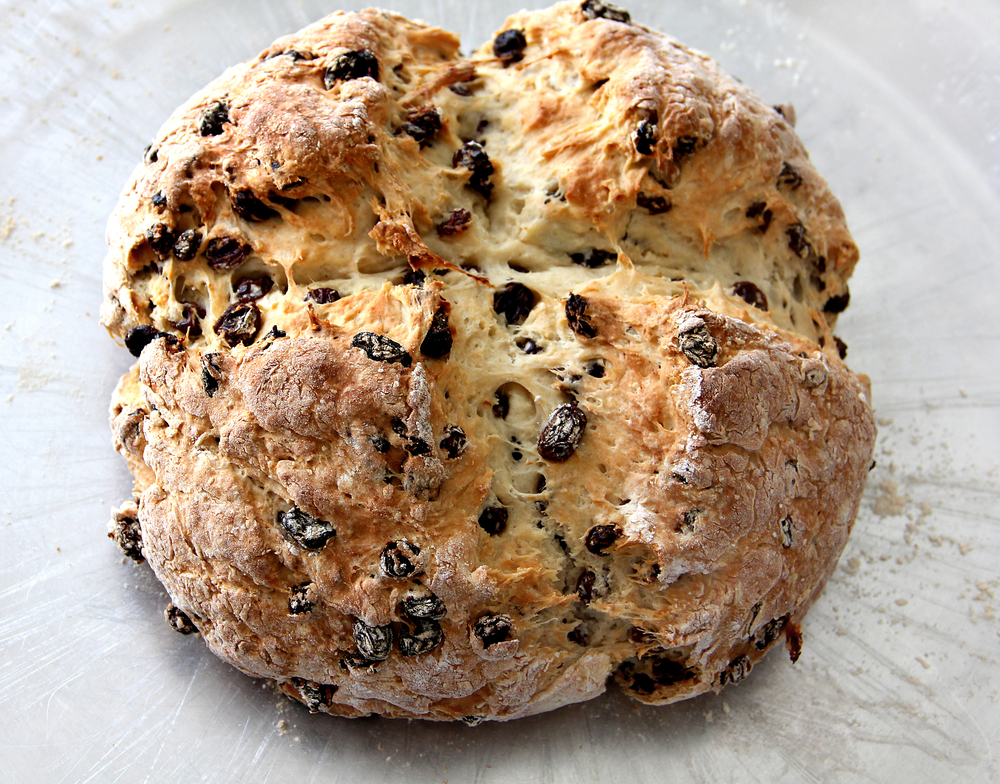
A loaf of Irish Soda Bread with raisins on baking sheet.

It’s not too hard to find green bagels, beer, and even green  milkshakes on St. Patrick’s Day in the US. Of course there’s also corned beef and cabbage – and “Irish soda bread” — with a cruciform slashed on top.  Have you ever wondered why the shape of the cross is slashed on the tope of the bread – and why it’s known as soda bread?

Soda Bread and Native Americans

The earliest reference to the chemical reaction that makes soda bread rise is actually credited to American Indians.  Centuries before soda bread became popular in Ireland, they added pearl-ash (potash), the natural soda in wood ashes, along with an acidic ingredient, to make their breads rise.

Soda bread became popular in Ireland when bicarbonate of soda, also known as bread soda, became available to use as a leavening agent.  Bread soda made it possible to work with the “soft” wheat grown in Ireland’s climate. “Hard” wheat flour, the main kind used in the US today, needs yeast to rise properly. “Soft” wheat flour doesn’t work well with yeast but is great for “quick breads” like soda bread.

According to The Society for the Preservation of Irish Soda Bread the earliest published recipe or soda bread was in a London magazine in 1836 – also later repeated in several US papers – that refers to a “receipt for making soda bread” found in a newspaper in Northern Ireland. The praise:  “there is no bread to be had equal to it for invigorating the body, promoting digestion, strengthening the stomach, and improving the state of the bowels.” Sounds like tasting good wasn’t a big priority!

In 19th century Ireland, making bread was part of daily life and most families lived in farmhouses where kitchens had open hearths, not ovens. Bread soda meant that anyone who didn’t have an oven (most people in Ireland in the 1800’s didn’t) could make soda bread.

The bread soda wasn’t perishable, was relatively inexpensive and buttermilk, a by-product of making butter, and the soft wheat for flour, both necessary components of soda bread, were commonly available. The bread was cooked on a griddle or in a bastible, a big cast-iron pot with a lid that could be put right into coals or a turf fire.

Brown Or White; Cake Or Farl?

“Plain” soda bread often appears with a main meal  — to soak up gravy – or at breakfast. It comes both brown and white, and in two main types, cake and farl.

Traditional brown Irish soda bread is basic table bread made from whole meal flour, baking soda (bread soda), salt, and buttermilk.  White soda bread, made with white flour, is considered slightly more refined than brown soda bead and is sometimes considered a more special occasion bread.

Cake tends to be found more in the south of Ireland while people in Northern Ireland seem to prefer farl — although both can be found in the North and South, sometimes with different names.

Cake is soda bread that is kneaded, shaped into a flattish round, then deeply cut with a cross on the top.  Now it’s normally baked in an oven.

For farl the dough is rolled into a rough circle and cut all the way through — like a cross — into four pieces or farls (“farl” is a generic term for a triangular piece of baking).  It’s usually baked in a heavy frying pan, on a griddle, or on top of the range or stove. It’s flatter and moister than cake.  Each farl is split in half “the wide way” before it’s eaten and is best when hot. It’s also allowed to cool and then grilled or fried as part of other dishes — especially the Ulster Fry,  a local breakfast where golden and crispy soda bread and potato farls have been fried in reserved bacon fat and are served with Irish bacon, sausage, black pudding, tomato and egg.

What’s Spotted Dog?

There are regional variations of the basic soda bread recipe – even though some purists would say there should be no additions to the dough.

In Donegal caraway seeds were traditionally put in the bread.  In earlier and leaner times when raisins or dried fruit were luxuries, a fistful of them or maybe even a little sugar or an egg — if either could be spared — would have been put into the white flour version of the bread during the harvest as a treat for the working men.

The non-traditional varieties of soda breads that are made with raisins, caraway, orange zest, and other add-ins are often called Spotted Dog.

What About The Cross On Top?

Before baking, a cross is traditionally cut on the top of the soda bread loaf with a knife – often said to ward off the devil and to protect the household.

Legend and symbolism aside, there’s a practical reason for the cruciform shape to be cut into the top of the dough. Slashing the dough lets heat penetrate into the thickest part of the bread and allows the bread to stretch and expand as it rises.

Slashing a round loaf with a cruciform shape ends up dividing the bread into quadrants that can be easily broken apart (the breaking of the bread). But, since Ireland is a Catholic country, the symbolism of the cross can also be interpreted as blessing (crossing) the bread and giving thanks.

One serving (74 g) of Irish Soda Bread with raisins and caraway seeds has 214 calories, 3.67g fat, 41.51g carbs, 4.86g protein.

cover_96x96

The Spring issue of Eat Out Eat Well Magazine is now available on iTunes.  Get it now!

Filed Under: Calorie Tips, Healthy Eating, Food Facts, Eating with Family and Friends, Holidays, Shopping, Cooking, Baking Tagged With: bread, Irish food, Irish soda bread, soda bread, St. Patrick's Day food

Love Pie? Did You Know There’s A Huge Variation In Calories?

February 16, 2014 By Penny Klatell, PhD, RN 2 Comments


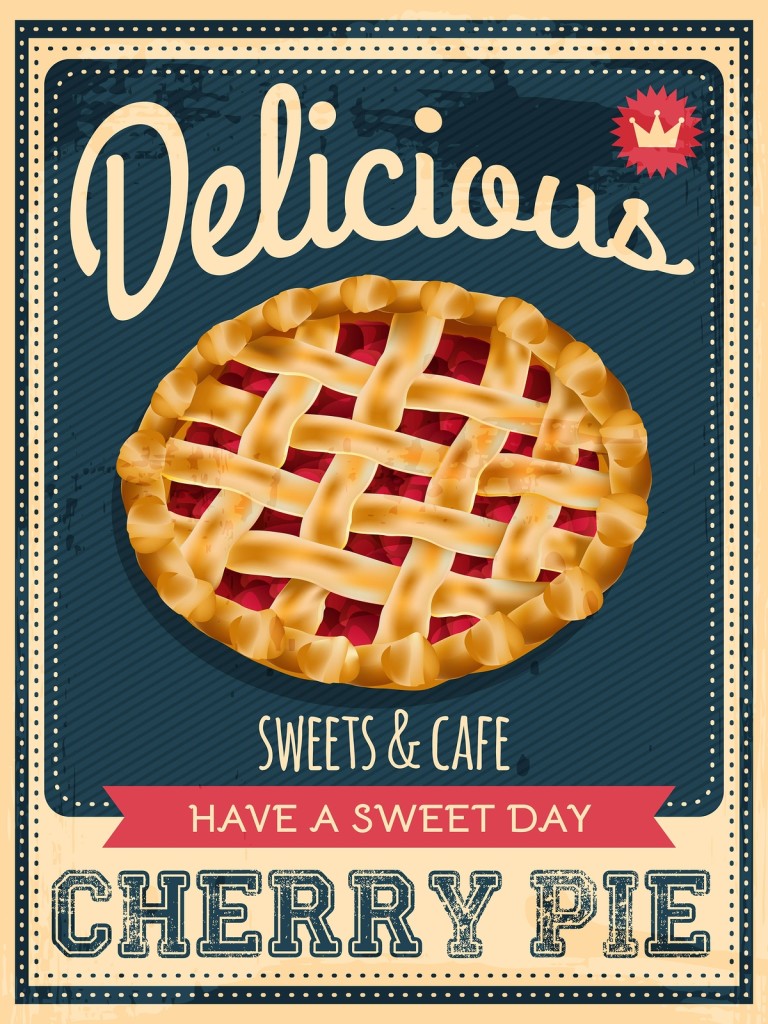
vintage-cherry-pie-bigstock53628028George Washington: “I cannot tell a lie, father, you know I cannot tell a lie! I did cut it [the cherry tree] with my little hatchet.”

It’s President’s Day weekend in the US and in honor of George  Washington, cherry trees, cherries, and the pie you can make with cherries – why not take a look at pies. What a segue!

Pies are anytime food – they come sweet and savory – but for many of us, “pie” conjures up sweet filling piled on top of – or in — a crust.

Some Pie History

Pie shells were originally just containers used for baking, storage, and serving — the crust was often too hard to actually eat. The first pies were savory meat pies, called “coffins” or “coffyns,” with tall, straight sides and sealed bottoms and lids. There were also open-crust pies, or “traps,” which served as casseroles for meat and sauce.

Early forms of pies, or galettes (essentially rustic free-form pies), can loosely be traced back to circa 9500 BC Neolithic Egyptians.

The ancient Greeks, who are thought to have been the originators of pie pastry, made a flour-water paste they wrapped around meat to seal in the juices as it cooked. After they conquered Greece, the Romans brought home pie recipes.  From there, the idea and practicality of pie spread throughout Europe with different cultures creating pies that suited their customs and local food.

Pie Comes To The Colonies

In the 1600s, the Pilgrims brought English-style, meat-based pies to the colonies. Crusty pie tops helped to both preserve food and to keep fillings fresh and colonists cooked lots of pies, both sweet and savory, using local ingredients along with berries, fruit, cinnamon, pepper, and nutmeg.

As settlers moved westward, more pies with regional flavors and ingredients were developed using fruit, berries but vegetables and game discovered with the help of Indians. Pies were delicious and practical — they required less flour than bread and could be more easily and cheaply baked. Apple trees produced fruit that was easy to dry and store in barrels during the winter, and apple pie became a mainstay: “As American as apple pie.”

What’ll ya have?  A cuppa joe and a piece of pie.

Today, no matter where you get your pie: the bakery, the local diner, or straight from your oven, the sweet treat can carry a big caloric punch. There is a huge difference in calories (and nutrition) between different kinds of pie.

To help you “have your pie and eat it, too” shown below are the calories in different kinds of pie. If you want to save a few calories:

  • choose the type of pie that has fewer calories than another kind.
  • Be aware of the size of the slice – some are huge, some are slivers
  • How many crusts, one or two – there are a lot more calories in a two crust pie
  • How much od the piece are you eating? No one says you have to eat all of a gargantuan piece and no one says you have to eat all of the crust.
  • What’s in the filling?  Some pies have way more calories than others. Recipes vary significantly – the average numbers shown below can give you an idea of good, better, and best pie choices — not in terms of flavor or the artistry of the baker, but for a general comparison of calories.  You’re going to be surprised!.

Pie Crust Facts (1/8 of a pie)

  •  Tulip                    60   calories
  • Ginger snaps       60   calories
  • Graham cracker   100 calories
  • Ready-made        120 calories
  • Homemade          149 calories

Average Calories in Popular Pies

  •  Apple, commercially prepared, 1/8 of 9” pie:  296 calories
  • Apple, prepared from recipe, 1/8 of 9” pie:  411 calories
  • Banana cream, prepared from recipe, 1/8 of 9″ pie: 387 calories
  • Blueberry, commercially prepared, 1/8 of 9” pie:  290 calories
  • Blueberry, prepared from recipe, 1/8 of 9” pie: 360 calories
  • Cherry, commercially prepared, 1/8 of 9” pie:  325 calories
  • Cherry, prepared from recipe, 1/8 of 9” pie:  486 calories
  • Chocolate creme, commercially prepared, 1/6 of 8” pie:  344 calories
  • Coconut custard, commercially prepared, 1/6 of 8” pie:  270 calories
  • Lemon meringue, commercially prepared, 1/6 of 8” pie:  303 calories
  • Lemon meringue, prepared from recipe, 1/8 of 9” pie:  362 calories
  • Mince, prepared from recipe, 1/8 of 9” pie:  477 calories
  • Peach, 1/6 of 8” pie:  261 calories
  • Pecan, commercially prepared, 1/6 of 8” pie:  452 calories
  • Pecan, prepared from recipe, 1/8 of 9” pie:  503 calories
  • Pumpkin, commercially prepared, 1/6 of 8” pie:  229 calories
  • Pumpkin, prepared from recipe, 1/8 of 9” pie:  316
  • Vanilla cream, prepared from recipe, 1/8 of 9” pie:  350 calories


Filed Under: Calorie Tips, Healthy Eating, Food Facts, Eating with Family and Friends, Entertaining, Buffets, Parties, Events, Food for Fun and Thought, Holidays, Manage Your Weight, Shopping, Cooking, Baking, Snacking, Noshing, Tasting Tagged With: calories in pie, eat out eat well, how to save calories eating pie, pie

Memories Of Childhood: Heart-Shaped Candy With A Special Message

February 13, 2014 By Penny Klatell, PhD, RN Leave a Comment


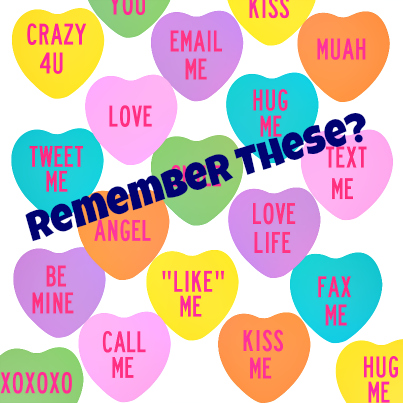
Conversation-Hearts-remember-theseDo you remember getting — or giving – those pastel candy hearts and secretly hoping that you’d get one with a special message?  Maybe you still share them with those special to you – or help your kids pick the ones they want to share.

“Be Mine,” “Kiss me,”  “XOXO”

The brightly colored hearts with familiar sayings — known as conversation hearts, motto hearts, and sweethearts — have been a Valentine’s Day treat since 1902. Their manufacturer, NECCO, the New England Confectionery Company in business since 1847, sells more than 8 billion candy conversation hearts a year.

How Did Candy Conversation Hearts Get To Be A Symbol Of Valentine’s Day?

Giving a gift of candy with an inscribed message can be traced back to the American colonists who shared homemade hard candy with messages etched into the surface with their sweethearts.

Years later after developing the process of printing red vegetable dye mottos on candy, the founder of NECCO and his brother turned this tradition into a business.

The candy’s original shape wasn’t a heart, but a seashell shape called a “cockle.” A message was written on a colored slip of paper that was wedged into the cockle’s shell.

NECCO started producing candy with mottos stamped on them in 1900, but the candy was shaped like horseshoes and baseballs that allowed for longer printed sayings like “How long shall I have to wait?” and  “Pray be considerate.” The candy called Sweethearts wasn’t shaped as a heart until 1902.

The original candies with printed sayings were called “motto hearts.”  The sayings and flavors have been updated over the years with new ones added periodically. Some of the newer flavors are strawberry, green apple, lemon, grape, orange, and blue raspberry and new sayings include “Tweet Me,” “Text Me,” “You Rock,” “Soul Mate,” “Love Bug,” and “Me + You.”

Candy Heart Facts

NECCO still uses the original recipe, process, and machines they used at the turn of the century to make the candy, producing 100,000 pounds a day. It takes about 11 months to produce the more than eight billion pieces — or about 13 million pounds – of colorful candy sweethearts that are sold in the six weeks before Valentine’s Day.  The little hearts with messages account for 40% of the Valentine candy market, just behind – you guessed it – chocolate!


Although you’d be hard pressed to call them nutritious, the candy hearts are fat free, sodium free, and a caloric bargain at about 3 calories for each small heart and about 6 calories for each larger “Motto” heart.


Filed Under: Calorie Tips, Healthy Eating, Food Facts, Food for Fun and Thought, Holidays, Snacking, Noshing, Tasting Tagged With: candy, conversation hearts, motto hearts, Sweethearts candy, Valentine's Day, Valentine's Day candy

  • « Go to Previous Page
  • Go to page 1
  • Interim pages omitted …
  • Go to page 15
  • Go to page 16
  • Go to page 17
  • Go to page 18
  • Go to page 19
  • Interim pages omitted …
  • Go to page 40
  • Go to Next Page »

Primary Sidebar

Recent Posts

  • Buy Me Some Peanuts And Cracker Jacks
  • Is Your Coffee Or Tea Giving You A Pot Belly?
  • PEEPS: Do You Love Them or Hate Them?
  • JellyBeans!!!
  • Why Is Irish Soda Bread Called Soda Bread or Farl or Spotted Dog?

Topics

  • Calorie Tips, Healthy Eating, Food Facts
  • Eating on the Job
  • Eating with Family and Friends
  • Entertaining, Buffets, Parties, Events
  • Food for Fun and Thought
  • Holidays
  • Lose 5 Pounds in 5 Weeks
  • Manage Your Weight
  • Restaurants, Diners, Fast Food
  • Shopping, Cooking, Baking
  • Snacking, Noshing, Tasting
  • Takeout, Prepared Food, Junk Food
  • Travel, On Vacation, In the Car
  • Uncategorized

My posts may contain affiliate links. If you buy something through one of the links you won’t pay a penny more but I’ll receive a small commission, which will help me buy more products to test and then write about. I do not get compensated for reviews. Click here for more info.

The material on this site is not to be construed as professional health care advice and is intended to be used for informational purposes only.
Copyright © 2024 · Eat Out Eat Well®️. All Rights Reserved.