• Skip to secondary menu
  • Skip to main content
  • Skip to primary sidebar

Eat Out Eat Well

  • Home
  • About
  • Eats and More® Store
  • Books
  • Contact

How To Slim Down Your Holiday Baking

December 11, 2012 By Penny Klatell, PhD, RN Leave a Comment

Bake With Less Sugar And Butter (You Can Really Get Away With It)
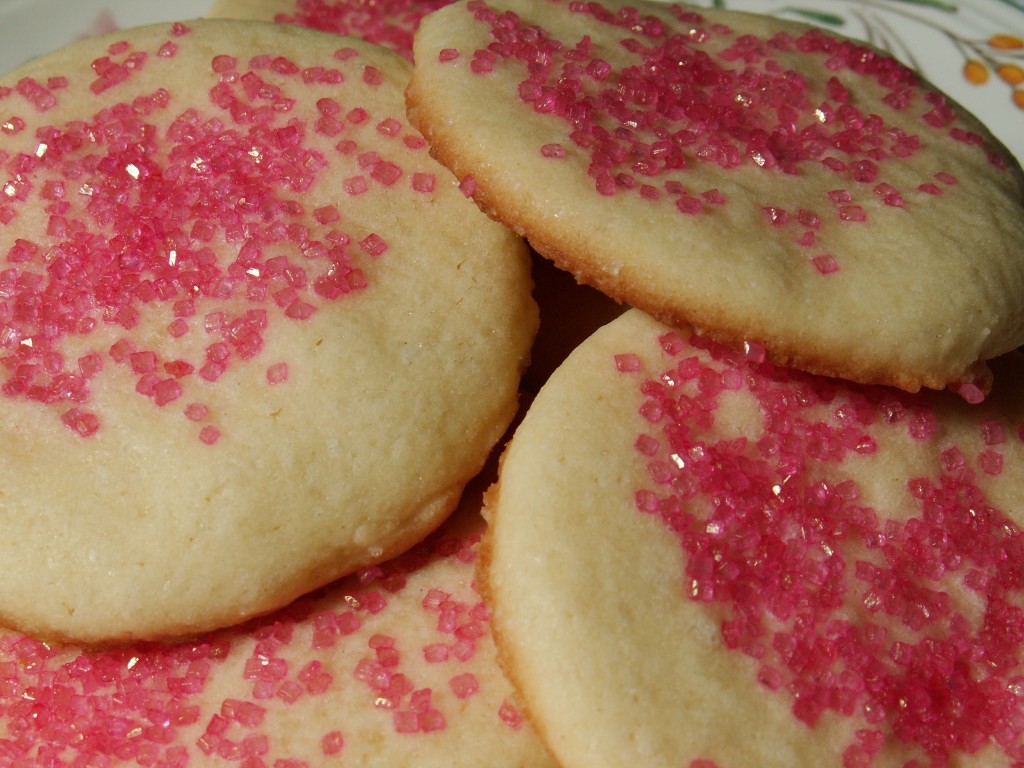
Does holiday season mean, among other things, baking lots of cookies:  spritz, rolled, ginger bread men, meringues, pies, biscuits, breads, and whatever other recipe sounds good?  Maybe not fruit cake.

The total number of butter and sugar calories in all of these baked delights would be so staggering it would absolutely spoil the deliciousness.

There are ways to lower the calories in baked goods without drastically affecting the taste or texture.  In most cases, no one will even notice.

Some Baking Substitutions To Try

  • Decrease the amount of fat and sugar called for in your recipe.  Decreasing the amount of sugar by a third doesn’t even really affect the taste – although sometimes you need to experiment to see how it might affect the texture, too.
  • For brownies, fruit breads, and cake-like cookies, use ¼ cup of applesauce and ¼ cup of vegetable oil or butter instead of a half cup of oil or butter – OR — replace half the butter or oil with unsweetened applesauce, pureed pumpkin, or mashed bananas. For every half-cup of oil you replace with pureed pumpkin, you’ll save more than 900 calories and 100 grams of fat  — and pumpkin keeps baked goods moist.
  • Use 2 egg whites or ¼ cup egg substitute for one egg; use 3 egg whites and 1 egg yolk for 2 whole eggs.
  • Decrease the amount of sugar in your recipe by up to a half and add ginger, lemon zest, cinnamon, or cloves to spark the flavor.
  • Substitute nonfat sweetened condensed milk for sweetened condensed milk.
  • Use evaporated skim milk instead of evaporated milk.
  • Instead of sour cream use nonfat or low fat sour cream, pureed low-fat cottage cheese, or low or nonfat Greek yogurt.
  • Substitute low or nonfat cream cheese for full fat cream cheese.
  • Substitute non-fat, 1%, or 2% milk for whole milk and half and half for cream.
  • Substitute 1/2 cup mini chocolate chips, chopped dried fruit, or chopped nuts for 1 cup of chocolate chips.
  • Swap 3 tablespoons of cocoa powder plus 1 tablespoon of oil or water for one ounce of baking chocolate.
  • For frosting use sliced fresh fruit with a dusting of powdered sugar, sweetened and flavored (vanilla, peppermint) nonfat cream cheese, or nonfat whipping cream.
  • Use whole wheat flour (12g of fiber per cup) or ground flax for up to half of your recipe’s white flour. Regular whole wheat flour will make baked goods heavier and denser.  Try using white whole wheat four that is higher in fiber and nutrients than refined flour but is lighter than regular whole wheat flour.
  • For fruit pies, use half the sugar called for in the recipe – a savings of 774 calories for every cup of sugar you don’t use.
  • Substitute part-skim ricotta cheese for cream cheese in cheesecake, which doubles the protein and cuts the fat by about 60 grams for each substituted cup.

Tastes Aren’t Calorie Free

It’s amazing how little tastes and nibbles are so easy to forget in the calorie ledger.  Just remember — the dough from the bowl has the same number of calories as the baked cookie – and they add up pretty quickly!  Dump the bowls and beaters into the sink as soon as you’re finished with them to help resist the temptation of licking the batter off of the beaters and out of the bowls.
For more hints and tips about holiday eating get my book,  The Sensible Holiday Eating Guide: How To Enjoy Your Favorite Foods Without Gaining Weight, available from Amazon for your kindle or kindle reader.

Filed Under: Calorie Tips, Healthy Eating, Food Facts, Holidays, Manage Your Weight, Shopping, Cooking, Baking Tagged With: baking substitutions, holiday baking, holiday cookies, holiday eating, slimmed down baked goods

What’s A Latke – And Is It Always Made From Potatoes?

December 7, 2012 By Penny Klatell, PhD, RN Leave a Comment

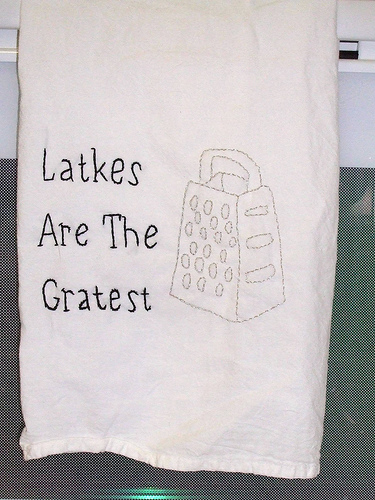
Not a fritter and not a flat dough circle hot off the griddle, a latke — commonly called a potato pancake — is traditionally made from potatoes, grated onions, and some form or combination of binders like eggs, flour, and matzoh meal. The potatoes aren’t the fancy kind.  Russets (Idaho potatoes) are commonly used because they brown well and have a high starch content which sops up moisture making for a tender interior.

Potato pancakes are common in many parts of the world.  Why not – they’re easy and inexpensive to make using locally grown vegetables, especially ones that store well like potatoes.

Potato pancakes of all kinds are often flavored with garlic or other seasonings, then shallow-fried in oil in a pan.  Some are made with sweet potatoes, other vegetables, chickpeas, cheese, or whatever else the cook wants to add – and how far he or she wishes to fly in the face of tradition.

Hanukkah Food

Latkes, a Yiddish derivation from the Ukrainian word (oldka) that translates to pancake or fritter, are a favorite Hanukkah food. The Ukranian word is a diminutive of an Old Russian word (olad’ya) that stems way back to elaia, the Ancient Greek word for “olive.” Fast forward many centuries and about five languages and latkes are “little tiny things made of (olive) oil.”

Hanukkah (or Chanukah), the Festival of Lights, is an eight-day Jewish celebration that commemorates the second century BC victory of the Maccabees over the Syrians. After the victory Judah called on his followers to cleanse the Second Temple, rebuild its altar, and light its menorah, the gold candelabrum with seven branches representing knowledge and creation.

The Temple needed to be rededicated by lighting the eternal light present in every Jewish house of worship — which shouldn’t be extinguished once lit. There was only one pitcher of untainted sacramental oil, barely enough to burn for one day, but miraculously, the small amount of oil continued to burn for eight days and eight nights.

Fried foods like latkes (also called levivot) and soofganiyot (donuts) are eaten on Hanukkah because they are cooked in oil, a reminder of the miracle of the single pitcher of oil in The Temple, which lasted for eight days instead of one.

Want Crisp — Not Soggy — Latkes?

Latkes should have a deeply browned crust with lacy edges. They don’t have smooth and mashed-potato-like insides – they’re made from shredded or grated potatoes, not mashed.  Potatoes and onions, especially when they’re grated, ooze moisture, so they and other ingredients need to be dried with paper towels or have the moisture squeezed out before frying or they’ll be soggy.

  • Oil doesn’t go into the latkes, but since they’re fried, it’s an essential ingredient. Don’t skimp on the amount you put into the frying pan. You need enough so the latkes will cook evenly. If you use too little, the outsides get too dark before the insides are cooked through. Olive oil might have too low a smoke point for latke frying, so use another kind of oil like canola, grapeseed, or peanut – all of which have high enough smoke points.
  • Oil that isn’t hot enough seeps into food and makes it greasy. If you add oil to the pan when you’ve got batter in it, the oil probably isn’t going to be hot enough. Wait for the oil to get hot enough before adding the food – you’ll end up needing to add little, if any, to finish an entire batch. Test to see if the oil is hot enough by dropping a bit of batter into the pan. If it sizzles and the batter rises to the surface, the oil is hot enough and you’ll end up with crispy, but not greasy, latkes.
  • When you drop the batter into the oil, don’t crowd the pan or you’ll bring down the temperature of the oil. The latkes will be tough to turn and without space they might form one giant pancake.
  • Leave them alone until they get a nice golden crust on the bottom. They’re ready when both sides are deep brown and crusty. They darken as they cool so be careful that they’re not too dark — verging on burned. Remove each latke with two forks or a slotted spatula and fork, briefly holding it vertically over the frying pan to drip. Put them on layers of paper towels, which will sop up any extra oil.

For more hints and tips about holiday eating get my book,  The Sensible Holiday Eating Guide: How To Enjoy Your Favorite Foods Without Gaining Weight, available from Amazon for your kindle or kindle reader.

Photo credit

Filed Under: Holidays, Shopping, Cooking, Baking Tagged With: Hanukkah food, holidays, latkes, potato pancakes

Is There A Polar Bear In Your Box Of Animal Crackers?

December 4, 2012 By Penny Klatell, PhD, RN Leave a Comment

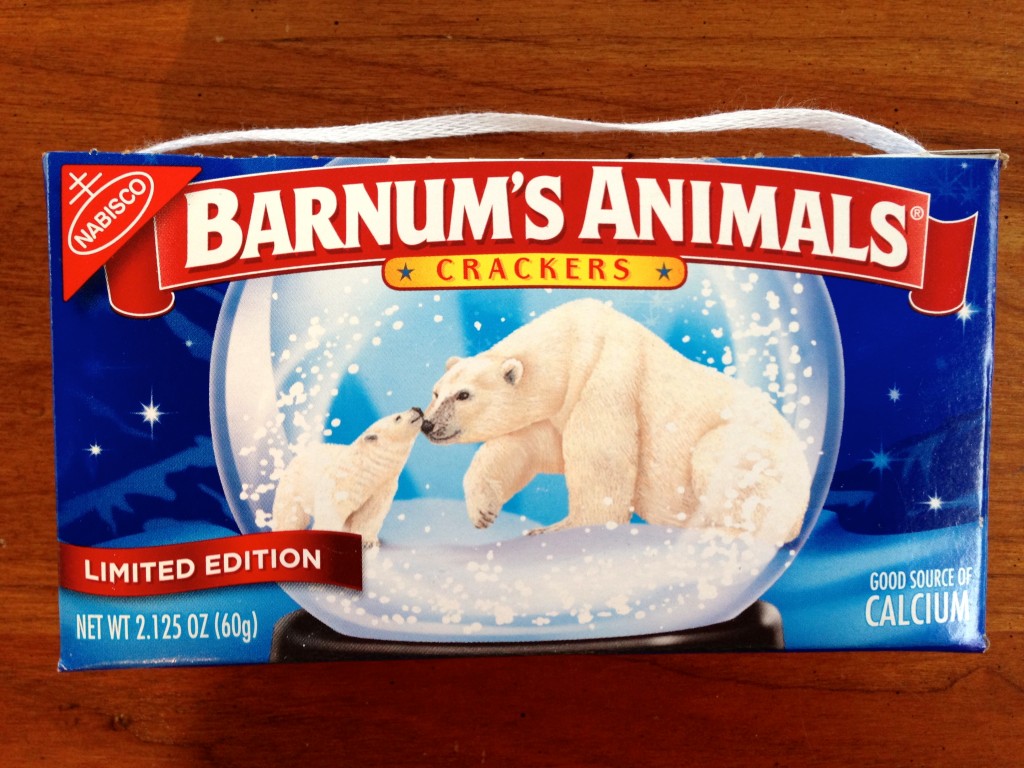
Holiday animal crackers — in the classic box with the string handle and a holiday polar bear cub and mama in a snow globe on a starry blue background – can probably be found in your local market.  What kid (and some adults) wouldn’t want to grab a box or two!  But is there a polar bear on the inside, too?

A Bit Or Two About Those Little “Crackers”

Animal crackers, those easy to pop into your mouth crackers (cookies) in the shape of zoo or circus animals, are made from a layered dough– the way biscuits are made — but are sweet like cookies. The classic ones are light colored, slightly sweet, and crunchy – but some companies make frosted or chocolate flavored kinds, too.

Biscuits called “Animals” arrived on American shores from England in the late 19th century. Around the start of the 20th century, domestic bakeries, predecessors of the National Biscuit Company, now called “Nabisco Brands,” started producing “Barnum’s Animals” which looked like the circus animals found in the Barnum and Bailey circus.

Originally the package looked like a circus cage on wheels and full of animals. Perforated paper wheels used to continue under the bottom of the box and could be opened up allowing the circus cage box to stand on its wheels.

The little box with the string that we know and love – and can still buy (although without the perforated wheels) — was designed for the 1902 Christmas season – and sold for five cents. The string was for hanging the box from Christmas tree.  Obviously a design that was a home run, although now sold for about two bucks a box.

Is There Circus In The Box?

In 1948, the name of the cookies officially became “Barnum’s Animal Crackers” although the animals have changed over the years.  There have  been 54 different animals – but not all of them play together in the same box.

Today, each package has 22 crackers and a toss up of animals. Lions, tigers, bears, and elephants will probably always be a part of the menagerie – but dogs and jaguars have yielded to hyenas and gorillas. I expected to find a whole bunch of polar bears in my holiday box with the polar bear on the front, but the winter white animal was nowhere to be found.   Here’s a selection of what I did find.

How Many???

More than 40 million bright red, yellow, or blue circus boxes, each with a variety of animals, are sold each year in the United States and abroad. An animal cracker takes about four minutes to bake and 15,000 cartons and 300,000 crackers are made each shift – which uses up about thirty miles of string for the packages, or nearly 8,000 miles of string a year.

Although the circus box has gone through updates and changes over the years, it remains bright, colorful and fun. There have been three different and limited edition boxes produced in the last decade, still the same shape and size, but with a different design on the outside of the box.

Ingredients And Nutrition

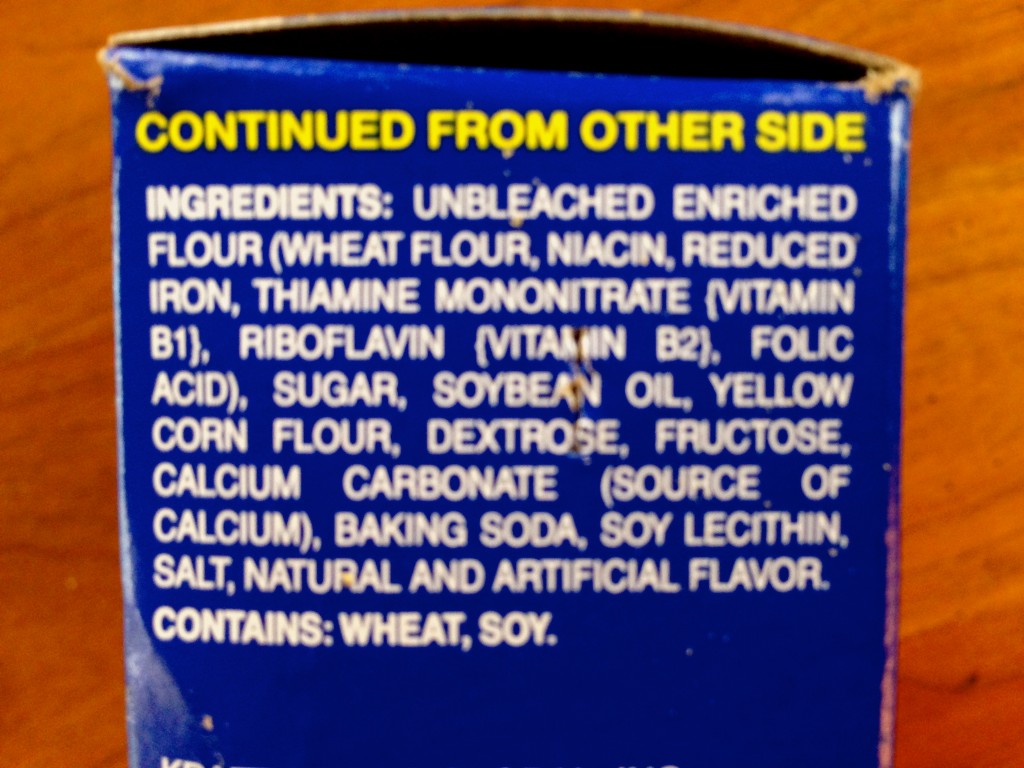
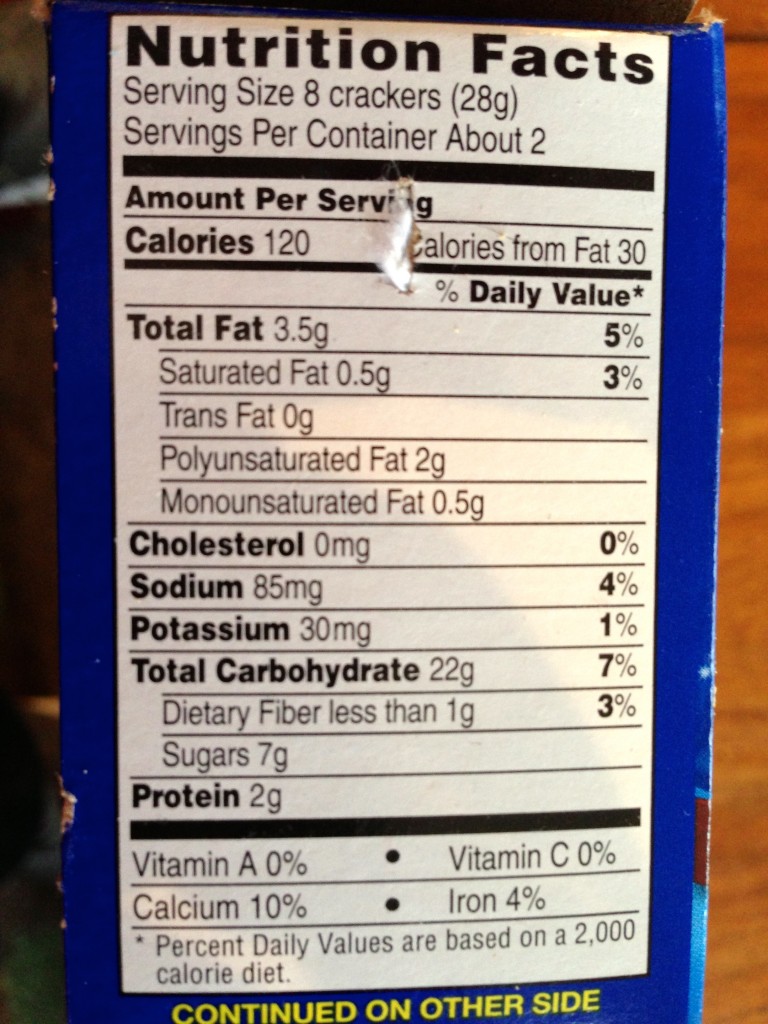
Here’s what you’ll find in a box.  Note that there are two servings, not one in each box so adjust the nutrition accordingly. 

Filed Under: Food for Fun and Thought, Holidays, Snacking, Noshing, Tasting Tagged With: animal crackers, Barnums Animal Crackers, cookies, snacks. holiday cookies

It’s The Holiday Nibbling That Will Get You!

November 29, 2012 By Penny Klatell, PhD, RN Leave a Comment

Most of those waistline hugging, thigh bulging holiday calories don’t come from the “day of” huge holiday meals but from unrelenting nibbling over the holiday season.

It’s way too easy to add on an extra 500 calories a day over and above your average daily calorie needs.  An additional 500 calories a day translates into packing on about a pound in a week (7 x 500 = 3500 calories, or 1 pound).

Some common holiday indulgences that clock in at approximately 500 calories:

  • 12 ounces of eggnog
  • 1 piece of pecan pie
  • 3 ounces of mixed nuts
  • 1 large soft pretzel
  • Dunkin’ Donuts extra large hot chocolate
  • 22.5 Hershey’s Kisses
  • Starbucks’ Venti Peppermint Mocha with whipped cream
  • 4 (5oz.) glasses of wine
  • 5-7 Pigs-N-Blankets
  • 5 ounces of Brie cheese
  • 10 regular size candy canes
  • 2-3 large Christmas cookies
  • 2.5 potato latkes
  • 4 fun-sized Snickers and 20 pieces of candy corn
  • 4 ounces of chocolate fudge (without nuts)
  • 1 Dunkin’ Donuts blueberry crumb donut
  • 1 cup of Ben & Jerry’s chocolate ice cream

How many of these do you pop into your mouth during the holiday season when you’re out shopping or at a party?

For more hints and tips about holiday eating get my book,  The Sensible Holiday Eating Guide: How To Enjoy Your Favorite Foods Without Gaining Weight, available from Amazon for your kindle or kindle reader.

Filed Under: Calorie Tips, Healthy Eating, Food Facts, Holidays, Manage Your Weight, Snacking, Noshing, Tasting Tagged With: holiday eating, holiday nibbling, holidays, snacking, snacks, The Sensible Holiday Eating Guide

7 Ways Supermarkets Get You To Fill Your Cart

November 28, 2012 By Penny Klatell, PhD, RN Leave a Comment

Supermarkets have your shopping experience down to a science and they arrange and display their merchandise to artfully encourage you to buy more products.

High Shelf Or Low Shelf?

Ever hear something described as “top shelf”? That usually means the really good or the most expensive stuff. In supermarkets, where products are placed can send subtle signals that affect your purchase decision. The most expensive products generally are on the highest or top shelves. Lower shelves house “destination” products — the ones you need, look for, and will buy regardless of price. The bottom shelf has the least popular or generic products (where’s the flour and sugar in your market?).  Eye level shelves, known as “reach,” hold high impulse purchases, products that are competitive, or ones that are the most enticing.

What They Want You To Buy

If you’re used to seeing products in free-standing bins, on shelves, or on end caps (the shelves at the very end of aisles in the market you frequent), you’ll end up usually checking them out for specialties or bargains. The products on or in them are promoted products that probably have the highest profit margin for the store, are items with the lowest price, or they have a big manufacturer’s promotion like a coupon or reduced price. “Dump bins” or “offer bins” usually are a jumble of items being closed-out and seem to uniformly signal “cheap price.”  Can you honestly say that you can easily walk by big bins or specialty displays without at least looking?

A Crazy Quilt Of Fruit and Vegetables

In the produce departments, the displays of green vegetables are usually alternated with brightly colored produce.  The crazy quilt of beautifully colored fruits and vegetables is designed to draw your eye.

In Whole Foods, for instance, you’re instantly hit with what they want you to see/buy/eat.  Produce is right up front, arranged by shades of color, and displayed in black bins so the produce color really stands out and draws your attention.  According to a retail consultant, they’re priming you – giving you the impression that what you see is as fresh as possible – that way you’re prepared to spend more.

Why Are The Milk And Eggs In The Back Of The Store?

People go to the market to buy lots of things – but most frequently for destination purchases like milk, eggs and bread. In many markets those destination purchases are in the farthest corner of the store. Why? The more items you have to walk by to get to the destination purchase – the milk, bread, eggs — the more opportunity and the better the chance you’re going to buy other things that you walk by that suddenly you absolutely must buy. That’s the same reason impulse purchases like magazines, gum, and candy are near the cash register. Wile you wait to pay for the items in your cart the display or impulsive buys may entice you to toss one or two onto the checkout counter (the low level displays also entice kids to grab candy from them and more often than not, to avoid a scene, parents give in).

Is There A Café Up Front?

Some markets now have a cafe or place to sit and eat the food you have purchased.  In many Whole Foods the eating areas are very near the entrance.  A branding design expert says the intent is to get you in the mood for shopping. As soon as you walk in and you see other people enjoying the products that you can buy and then eat, it gives you incentive to purchase and eat them, too.

The Size Of Your Shopping Cart

Have you seen the size of some of the shopping carts – especially in the bigger or newer stores where there are nice wide aisles? Or, how about the stores with kid size carts, too?  You end up filling – and buying – an adult sized (perhaps oversized) cart’s worth of groceries and a kid-sized cart of groceries, too.  How many adults can tell a child that they aren’t going to buy what the child has put into his or her own cart?

A retail consultant’s firm calculated that increasing the size of shopping baskets can boost a store’s revenue by up to 40% — the reason that over the past three years Whole foods has increased the size of its shopping baskets.

Is There Music In The Air?

From a branding design expert:  hearing old favorite songs in a store helps you form a quick emotional bond with the store – the feeling that the store “gets you.”  In Whole Foods you very likely might hear hits from the ‘80s and ‘90s.  Don’t you have a tendency to buy more when you’re relaxed and in a comfortable atmosphere?

A Colorful Bonus Tip

What color are the sales stickers on your merchandise?  Mostly yellow and red? Here’s why: yellow and red signs and stickers elicit the biggest consumer response. So, heads up – especially when you see a nice red or yellow sale sticker stuck on something – it might end up in your cart!

Filed Under: Food for Fun and Thought, Shopping, Cooking, Baking Tagged With: purchased food, shopping cart, supermarket, supermarket food purchases

  • « Go to Previous Page
  • Go to page 1
  • Interim pages omitted …
  • Go to page 62
  • Go to page 63
  • Go to page 64
  • Go to page 65
  • Go to page 66
  • Interim pages omitted …
  • Go to page 131
  • Go to Next Page »

Primary Sidebar

Recent Posts

  • Buy Me Some Peanuts And Cracker Jacks
  • Is Your Coffee Or Tea Giving You A Pot Belly?
  • PEEPS: Do You Love Them or Hate Them?
  • JellyBeans!!!
  • Why Is Irish Soda Bread Called Soda Bread or Farl or Spotted Dog?

Topics

  • Calorie Tips, Healthy Eating, Food Facts
  • Eating on the Job
  • Eating with Family and Friends
  • Entertaining, Buffets, Parties, Events
  • Food for Fun and Thought
  • Holidays
  • Lose 5 Pounds in 5 Weeks
  • Manage Your Weight
  • Restaurants, Diners, Fast Food
  • Shopping, Cooking, Baking
  • Snacking, Noshing, Tasting
  • Takeout, Prepared Food, Junk Food
  • Travel, On Vacation, In the Car
  • Uncategorized

My posts may contain affiliate links. If you buy something through one of the links you won’t pay a penny more but I’ll receive a small commission, which will help me buy more products to test and then write about. I do not get compensated for reviews. Click here for more info.

The material on this site is not to be construed as professional health care advice and is intended to be used for informational purposes only.
Copyright © 2026 · Eat Out Eat Well®️. All Rights Reserved.