• Skip to secondary menu
  • Skip to main content
  • Skip to primary sidebar

Eat Out Eat Well

  • Home
  • About
  • Eats and More® Store
  • Books
  • Contact

water-filled foods

Tired? Have An Annoying Headache? Here’s A Cheap Cure-All

February 15, 2013 By Penny Klatell, PhD, RN 1 Comment

Are you feeling that 3 o’clock fatigue?  Do you have a kind of niggling but not-quite-full-blown headache?

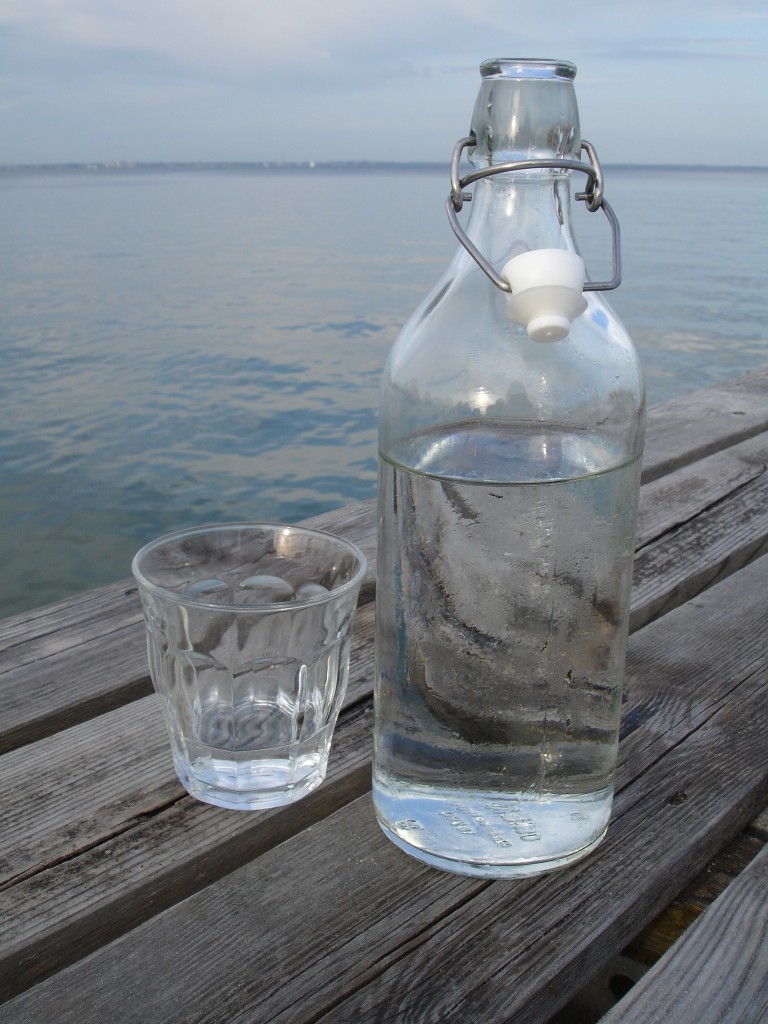
A glass of water might be a cheap cure-all.

Dehydration Causes Fatigue

Yep – a low water level can make you tired.  Don’t you wish you had a dipstick to measure the water levels in your body – like you measure the level of oil in your car?

Even being mildly dehydrated can slow your metabolism, drain your energy, and make you feel tired.

There are some signs you can look for.  In addition to feeling tired, with mild to moderate dehydration you might also:

  • Have a dry, sticky mouth
  • Be thirsty
  • Not urinate as much
  • Have fewer or no tears when you cry
  • Have dry skin
  • Headache
  • Constipation
  • Be dizzy or lightheaded

About 60% Of Your Body Weight Is Water

Water is the main chemical component in your body and accounts for about 60% of your body weight. Every system in your body depends on it.

You need water for the chemical and metabolic processes to take place in your body; for body fluids like tears, sweat, and urine; to flush toxins out of your vital organs; and to carry nutrients to your cells.

How Much Water Should I Drink?

There’s no easy answer to the question:  “How much water should I drink?”  The answer really depends on many things including:

  • your health
  • your age
  • how active you are
  • where you live

For the average healthy adult who lives in a temperate climate, the Institute of Medicine recommends around 3 liters (about 13 cups) of total water intake a day for men and 2.2 liters (about 9 cups) of total water intake a day for women.

What’s Total Water Intake?

Total water intake is not just plain water. It includes the plain water you drink, the water in all of your other beverages, and the water in your food. All fluids count toward your daily total.

On average, food supplies about 20% of your total water intake. Many fruits and vegetables — like watermelon, grapes, lettuce, and tomatoes — are 90% or more water by weight. Food from grains like oatmeal and pasta are also hydrating because they swell up with water when they’re cooked.  Even meat is full of water.

Beverages like milk and juice are mostly made of water, too. Even beer, wine and caffeinated beverages — coffee, tea or soda — can contribute, but they shouldn’t be the major portion of your daily total fluid intake. Water is calorie-free, inexpensive, readily available and your best bet.
Filed Under: Calorie Tips, Healthy Eating, Food Facts, Food for Fun and Thought, Snacking, Noshing, Tasting Tagged With: drinking water, how much water to drink a day, water, water in beverages, water-filled foods

How Juicy, Delicious Watermelon Can Help You Lose Weight

August 1, 2012 By Penny Klatell, PhD, RN 7 Comments

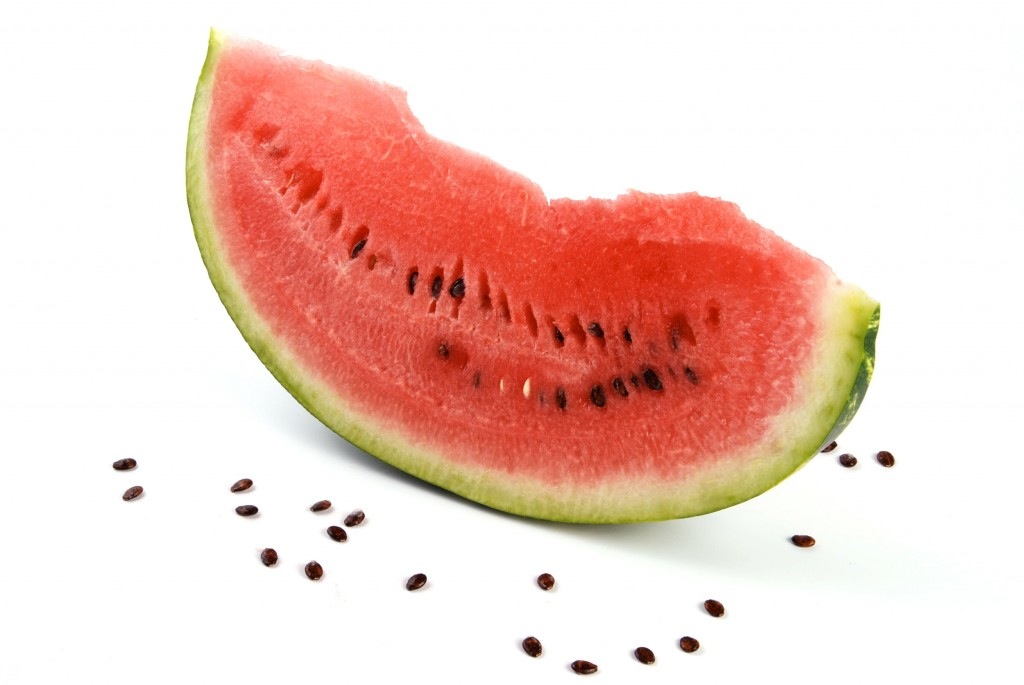
Here’s the reason:  food that has a high water content — like cucumbers, soup (especially broth-based soup), and, you guessed it, watermelon — make you feel full and, they’re usually relatively low calorie foods.

How great is it that something as nutritious and calorie friendly as watermelon is such a treat?  Juicy watermelon has certainly finished off lots of camp meals and family picnics and dare I mention the college special: watermelon infused with vodka?  And, how pretty are those intricate carved watermelon baskets filled with watermelon, cantaloupe, and honeydew balls?  Very labor intensive.  My mother was good at that.

I just came back from a trip to Greece where just about every lunch and dinner ended with a beautiful platter of red, ripe watermelon.  Totally satisfying, thirst quenching, and an important component of the Mediterranean diet.

A Melon With History

The first recorded watermelon harvest was in Egypt, nearly 5,000 years ago. Now you can find more than 1,200 varieties grown in 96 countries.  Watermelon — 92% water and 6% sugar — is a cousin of cucumbers, pumpkins, and squash and is the most consumed melon in the US, followed by cantaloupe and honeydew.

Some Watermelon Trivia

  • Watermelon, with its water content, is a volume food. It fills you up and quenches your thirst and is great for weight control.
  • One wedge (about 1/16 of a melon, 286 g) has 86 calories, no fat, 22g carbs, 1g fiber, and 2g protein.
  • 10 watermelon balls (122g) have 37 calories, 0 fat, 9g carbs, 0g fiber, and 1g protein
  • 1 cup of diced watermelon (152g) has 46 calories, 0g fat, 11g carbs, 1g fiber, and 1g protein
  • Two cups of red flesh watermelon chunks supplies 25% of daily vitamin A, 30% of daily vitamin C, B6 (6%) of B6; 8% potassium, 4% phosphorus, 8% magnesium, beta carotene, and lycopene.
  • Watermelon’s inner rind is edible and has a bunch of hidden nutrients.  The outer rind, also edible, is sometimes used as a stir-fried or stewed vegetable or as a pickled condiment.
  • Look for a watermelon that’s firm, symmetrical, and bruise, cut, or dent free. It should be heavy for its size and its underside should have a creamy yellow spot from where it sat on the ground while it ripened in the sun.
  • Whole melons will keep for 7 to 10 days at room temperature but lose flavor and texture if they’re stored too long. They’ll keep for three to four days in the fridge after they’re cut.

Unusual Watermelon Salads

I recently had a salad made with arugula, yellow watermelon chunks, grilled red watermelon slices, pistachios, grated ricotta salata, and balsamic dressing.  It was awesome.

Here’s another salad I frequently make.  I’m not too precise with my measurements and it still tastes fantastic:

Mediterranean Watermelon Salad (adapted from watermelon.org)

Ingredients:

  • 6 cups torn mixed salad greens
  • 3 cups cubed seeded watermelon
  • 1/2 cup sliced red onion
  • 1/3 cup crumbled feta cheese
  • 1/2 cup watermelon vinaigrette
  • Freshly ground black pepper
  • Mint sprigs

Watermelon Vinaigrette:

  • 2 tablespoons honey
  • 1/4 cup pureed watermelon (puree chunks in a food processor)
  • 2 tablespoons white wine vinegar
  • 1/4 teaspoon pepper
  • 1 teaspoon olive oil

Directions:

Make the vinaigrette by whisking  all of the ingredients together. Store it in the refrigerator and shake well before using. Makes about 1/2 cup.

In a large bowl, mix all of the salad ingredients except the vinaigrette, pepper, and mint. Just before serving, toss the salad mixture with the vinaigrette. Garnish with pepper and mint sprigs.

Makes 6 servings. About 75 calories per serving.

Filed Under: Calorie Tips, Healthy Eating, Food Facts, Manage Your Weight Tagged With: calorie tips, food facts, fruit, healthy eating, high volume foods, low calorie foods, melon, summer fruit, water-filled foods, watermelon, weight management, weight management strategies

Primary Sidebar

Recent Posts

  • Buy Me Some Peanuts And Cracker Jacks
  • Is Your Coffee Or Tea Giving You A Pot Belly?
  • PEEPS: Do You Love Them or Hate Them?
  • JellyBeans!!!
  • Why Is Irish Soda Bread Called Soda Bread or Farl or Spotted Dog?

Topics

  • Calorie Tips, Healthy Eating, Food Facts
  • Eating on the Job
  • Eating with Family and Friends
  • Entertaining, Buffets, Parties, Events
  • Food for Fun and Thought
  • Holidays
  • Lose 5 Pounds in 5 Weeks
  • Manage Your Weight
  • Restaurants, Diners, Fast Food
  • Shopping, Cooking, Baking
  • Snacking, Noshing, Tasting
  • Takeout, Prepared Food, Junk Food
  • Travel, On Vacation, In the Car
  • Uncategorized

My posts may contain affiliate links. If you buy something through one of the links you won’t pay a penny more but I’ll receive a small commission, which will help me buy more products to test and then write about. I do not get compensated for reviews. Click here for more info.

The material on this site is not to be construed as professional health care advice and is intended to be used for informational purposes only.
Copyright © 2024 · Eat Out Eat Well®️. All Rights Reserved.