• Skip to secondary menu
  • Skip to main content
  • Skip to primary sidebar

Eat Out Eat Well

  • Home
  • About
  • Eats and More® Store
  • Books
  • Contact

eat out eat well

Does The Way You Read A Menu Influence What You Order?

March 1, 2013 By Penny Klatell, PhD, RN Leave a Comment

Not everyone reads the menu the same way.  Actually, reading a menu can be a little like reading a newspaper.  Think about it – where do your eyes go first? Researchers have studied what most of us do and savvy restaurateurs make good use of their findings when they design their menus.

Where Do Restaurants Usually Feature Their Most Profitable Items?

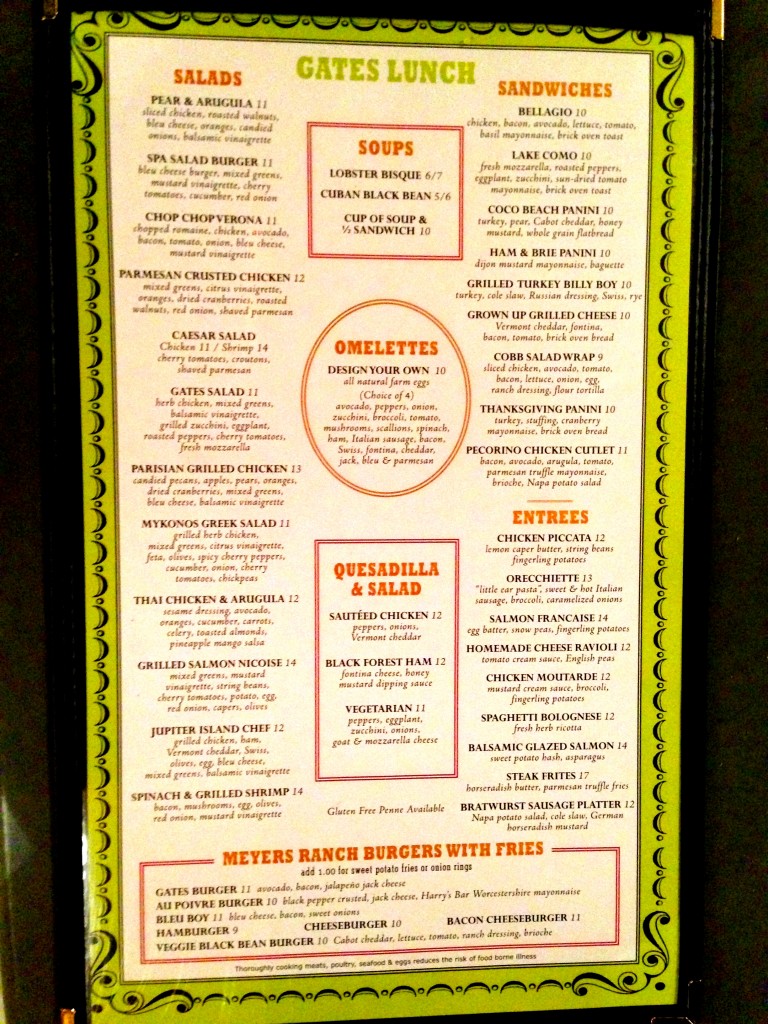
Look at a menu. The most important ideas are at the top right of the front page — the spot where your eyes tend to land first. In a two-page/single-fold menu, the most common type, the top right is where you’ll most likely find the most profitable items or the specials. In a single-page format, where the entire menu is on a single page or card, the area of focus is the top half of the page.

Do You Read Or Scan?

Most people don’t “read” a menu but rather “scan” it with their eyes. It makes sense to put the items the restaurant wants to sell where your eye goes first. “Eye magnets” like colored boxes, large fonts, or icons and symbols help direct your gaze. Bold typefaces grab attention and are designed to steer you to what they want you to order. Well thought out use of eye magnets can increase restaurant sales up to 10%.

 Where Do You Look First?

On a two-page menu, a lot of us often go to the right page, go back and read the left page, and then back to the top right to take another look. By the time most of us get to the middle and bottom of the right page our attention is fading. That ends up being where restaurants put items they don’t mark up or ones they know will sell anyway. For instance, unless you’re in a steakhouse, that’s where you’ll probably find the steak — because those of us who are going to order steak are usually going to order it regardless of where it is on the menu. Items they don’t want to feature — maybe things that don’t make money or stand-bys like burgers or eggs that sell anyway — go below the high profit items or on the back of a three or four page menu.

Tip: You’ll likely find a restaurant’s most profitable items or specials — the things they want you to order — on the top right of the front page of a two-page menu or the top half of the page on a single page menu.

Eye Magnets

Some newer research has shown that some of us may read the menu sequentially – the reason menus start with appetizers, go to entrees, and end with dessert, with soup and salad in between.

Regardless of your menu reading habits – some people scan the dessert choices first to figure out if they’ll start with a “lighter” appetizer and go for a big time dessert – the purpose of “eye magnets” and other attention getting mechanisms is to direct your eye toward what the restaurant is highlighting (some might call it “pushing”).

Tip: “Eye magnets” — like colored boxes, larger fonts, and icons or symbols — are used to help direct your gaze.


Do you eat out?  This is the fourth article in a series of consecutive posts about decoding restaurant menus. Keep checking back for more information that might help you with your restaurant choices.

Please share if you know anyone who wants to eat out and eat well!

Filed Under: Food for Fun and Thought, Restaurants, Diners, Fast Food Tagged With: choosing food in a restaurant, eat out eat well, reading a menu in a restaurant, restaurant dining, restaurant menu, restaurant menu design

What Kind Of Restaurant Is This?

February 26, 2013 By Penny Klatell, PhD, RN Leave a Comment

You can tell a lot from a restaurant’s menu – not just what you can get to eat, but some other things, too.  It would be kind of weird to have spaghetti and meatballs on the cover of a pancake house restaurant – and it would be kind of gross to have grease stains and tomato sauce on a rumpled sheet of paper that lists the restaurant’s specials.

A Menu Is A Defacto Business Card

A menu acts as the restaurant’s business card and can quickly give you some ideas about its inner workings. A dirty menu might imply a dirty kitchen; a clean and neat menu creates a different impression. Even though the main purpose is to tell you what’s to eat, a secondary objective is to make you forget about money so you make your food and drink selections without thinking about the price.

The way the menu looks should be in sync with the restaurant’s concept and image — the décor, service, food quality, and price range — and give you an idea about what kind of eating experience is in store. A six or eight page plastic coated menu, the kind usually found in diners, doesn’t convey the same dining experience as the two page leather bound menu found in an upscale restaurant.

Tip:

A menu’s design should be in sync with the restaurant’s concept and image — the décor, service, food quality, and price range — and give you an idea about the overall dining experience you can expect.

Disorganized menus might mean a kitchen without a plan. A menu with a huge number of offerings (unless it’s a place like a diner with a big turnover) makes you wonder how fresh the food is – and how it’s being repackaged into different kinds of offerings.  A dirty menu is like a dirty bathroom and should make you  think about the cleanliness of the kitchen and the people working in it!

What are your thoughts?

Do you eat out?  This is the third article in a series of consecutive posts about decoding restaurant menus. Keep checking back for more information that might help you with your restaurant choices.

Filed Under: Entertaining, Buffets, Parties, Events, Food for Fun and Thought, Restaurants, Diners, Fast Food Tagged With: dining experience, eat out eat well, eating in a restaurant, menu, restaurant menu

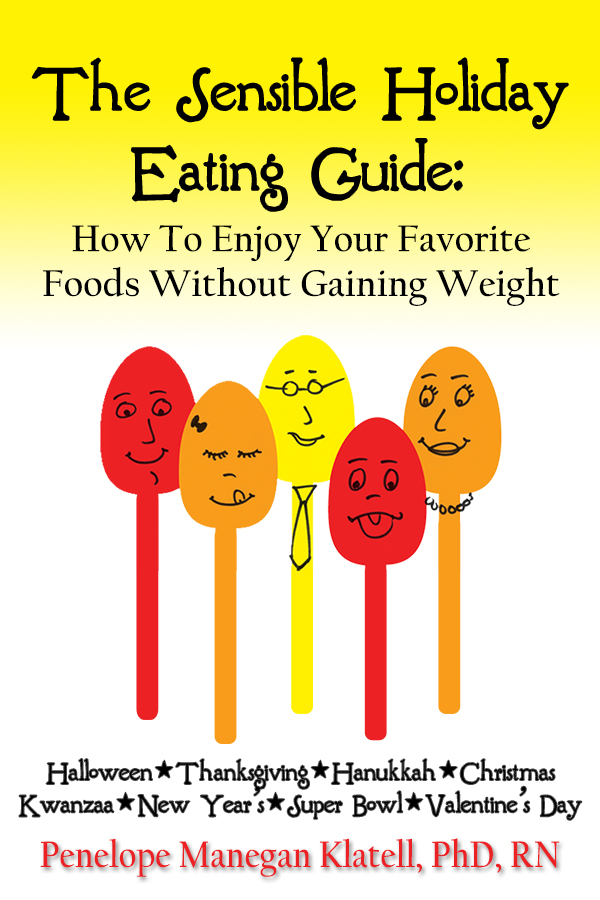
The Sensible Holiday Eating Guide: How To Enjoy Your Favorite Foods Without Gaining Weight

November 10, 2012 By Penny Klatell, PhD, RN Leave a Comment

#1 In Two Categories

My book, The Sensible Holiday Eating Guide:  How To Enjoy Your Favorite Foods Without Gaining Weight is #1 in two categories on Amazon, thanks to my wonderful readers.

Get your copy — it’s free through Sunday, 11/11.

This is the Amazon listing:

Best Sellers in Diets Top 100 Free

1. The Sensible Holiday Eating Guide: How To Enjoy Your Favorite Foods Without Gaining Weight

5.0 out of 5 stars

Amazon Best Sellers Rank:

#1 in Kindle Store > Kindle eBooks > Nonfiction > Advice & How-to > Diets & Weight Loss > Diets > Weight Loss

#1 in Kindle Store > Kindle eBooks > Nonfiction > Advice & How-to > Diets & Weight Loss > Diets > Weight Maintenance

Bonus Teleseminar — Thanksgiving Eating:  Challenges And Solutions

Don’t forget to sign up for a free 1/2 hour teleseminar on Thanksgiving Eating:  Challenges and Solutions.  Even if you can’t attend, the teleseminar will be recorded and you’ll be sent the link to the recording by email.  Click HERE for the sign-up details.

Thanks to all of you who have helped make my book a success.  My goal is to give some tips, strategies, and ideas on how to make any eating — but particularly eating out at work, school, celebrations, events, and any place that’s not routine home eating — healthy, tasty, and fun.

Filed Under: Calorie Tips, Healthy Eating, Food Facts, Entertaining, Buffets, Parties, Events, Holidays, Manage Your Weight Tagged With: eat out eat well, holiday eating, holiday food, Thanksgiving Eating teleseminar, The Sensible Holiday Eating Guide

Key Words For “Maybe Yes, Maybe No” Menu Choices

August 28, 2012 By Penny Klatell, PhD, RN 1 Comment

Menus, both restaurant and take-out, are filled with descriptive and sometimes mouth-watering words.  They’re meant to:

  • entice you to order certain items by making them sound scrumptious, or to
  • make you think that a food, sauce, or dressing is lower in calories or an awesome health food.

Maybe Yes, Maybe No Adjectives

This is a list of words frequently used on menus to describe foods that can be considered “yellow light foods.” They are the foods you  should cautiously choose because they may or may not be healthy choices.

  • Amandine/Almondine
  • Baked
  • Basted
  • Light/Lite
  • Marinated
  • Panini
  • Reduced
  • Sauteed
  • Stewed
  • Stir-Fry
  • Vegetarian
  • Vinaigrette

 Why They’re Yellow Light Foods:

Amandine/Almondine:  Means food that is garnished with almonds. The caution: the ingredients (often green beans, fish, asparagus, potatoes) are usually cooked with butter and seasonings and sprinkled with whole or flaked toasted almonds. The butter makes them taste good and allows the nuts to stick to the main ingredient — but both add significant calories.

Baked:  Food that is cooked by using dry heat.  The caution light applies to the main ingredients. What is being baked – is it baked fish or a baked cookie?

Basted: Means that either the juices of the cooking meat, melted fat, or other liquids such as marinades – are poured over meat during the cooking process to keep it moist.  The caution is in determining what the basting liquid is:  fat or the juice of the meat?

Light or lite:  If 50% or more of the calories in a food come  from fat, the fat must be reduced by at least 50% per serving to be called light. If less than 50% of the calories come from fat, the fat must be reduced by at least 50% or the calories reduced by at least 1/3 per serving for the food to be called light. The caution:  food manufacturers determine these percentages through laboratory analysis – but how does your local diner determine what is “light or lite” even if there is a “light or lite” claim on their menu?

Marinated:  Means to soak or steep meat, fowl, fish, or vegetables in a liquid mixture — which is usually vinegar or wine and oil combined with various spices and herbs.  The caution:  how much oil or even sweetener is in the marinade that has permeated the meat, fowl, fish, or vegetables?

Panini:  A pressed and toasted sandwich.  The caution:  What are the sandwich ingredients — for instance are they heavy on vegetables or on salami — and how much oil is used on the grill? If the sandwich comes out nice and crunchy and crispy you can bet it was pressed on a grill loaded with grease.

Reduced:  To be called reduced in calories, a food must contain at least 25% fewer calories per serving than the reference food (the version of the food that is not lower in calories).  For meals and main dishes there must be at least 25% fewer calories per 100 grams of food.  The caution:  the “reference food” (the regular, not low in calories version) may be a very high calorie food to begin with – meaning that 25% less of very high calories is still a lot calories.  And who’s measuring in the kitchen of your local restaurant? Don’t be duped.

Sauteed:  Means food that is fried quickly in a little oil.  The caution is the same as with stir-fry (see below); the amount of oil and the temperature of the oil.

Stewed:  To cook by slowly boiling or simmering.  The caution:  what is the stewing liquid — is it tomato based or is there a lot of fat?

Stir-Fry:  Means to cook small pieces of vegetables, grains, or meat by quickly frying and stirring them in a small amount of oil over high heat (frequently in a wok).  The caution is the amount and temperature of the oil.  Oil at a lower temperature will lead to a longer cooking time and the ingredients absorbing more oil.

Vegetarian:  Refers to a dish made without meat, fish, or fowl.  The caution is that many vegetarian dishes are prepared with a lot of breading, cheese, and fat.

Vinaigrette: A common salad dressing made with olive or other oils and combined with vinegar and/or lemon juice (plus seasonings and herbs).  The caution is in the proportion of oil to the acidic vinegar or lemon juice.  Sometimes it might be as great as 4:1 oil to acid and sometimes it might be 1:1, or half oil and half acid.  A fifty-fifty mix will be lower in calories than a mix that is 75% oil.

Do you have any “yellow-light foods” to add to this list?

For more menu key words and menu hacks be sure to sign up for my newsletter, “Eat Out, Eat Well.”  Just enter your email address in the box on this page — and don’t forget to confirm when you’re prompted by email.

Filed Under: Calorie Tips, Healthy Eating, Food Facts, Food for Fun and Thought, Manage Your Weight, Restaurants, Diners, Fast Food, Takeout, Prepared Food, Junk Food Tagged With: amandine, baked, basted, broiled, calorie tips, eat out eat well, food facts, grilled, healthy eating, light food, marinated, menu choices, menu key words, panini, reduced calorie food, stir-fry, weight management strategies

What’s A Chocolate Buzz?

August 8, 2012 By Penny Klatell, PhD, RN 2 Comments

I was in a restaurant the other night and the server brought a bunch of those individually wrapped dark chocolates along with the bill.  There were six of us at the table so there was a small pile of the foil wrapped goodies on the table.

I watched an almost four year old girl  (who has an incredible sweet tooth – especially for chocolate) wrap her little fist around as many as she could fit into her vice like grip – until her Father took notice and parsed out one — much to her dismay, or should I say, extreme annoyance.

Caffeine And Chocolate

Here are a couple of facts about chocolate and caffeine that most people don’t know:

Chocolate contains caffeine – not enough to give you a big time boost, but, depending on the type of chocolate, enough to register — especially if you’re a little kid stuffing in a couple of squares or a bunch of mini chocolate bars.

It would take about 14 regularly sized (1.5 oz) bars of milk chocolate to give you the same amount of caffeine that you’d get from an 8 oz cup of java. Along with that little caffeine buzz you’d also be shoving in about 3,000 calories and more than 300 grams of sugar.  If you’re looking for caffeine, coffee seems like a better bet at about two calories in an 8 oz cup of black coffee.

Dark chocolate, the kind now frequently found in those “after dinner along with the check foil wrapped squares,” has more caffeine content than milk chocolate. But, it would still take four regularly sized bars to get the same amount that you’d find in one cup of black coffee.

Something To Think About

The next time you find yourself reaching for those foil wrapped chocolate squares after dinner (or the ones placed on your pillow in some hotels) think a cautionary caffeine note if you want a restful sleep.

It’s also worth it to remember that getting kids (and some adults) to sleep on Halloween might have a whole lot to do with not just the sugar but also the amount of caffeine in the chocolate candy in trick or treat bags.

Caffeine In Chocolate

  • Hershey’s Milk Chocolate Bar, 1bar/1.55 oz:  9 mg caffeine
  • Hershey’s Special Dark Chocolate Bar, 1 bar/1.45 oz:  20 mg caffeine
  • Hershey’s Kisses, 9 pieces:  9 mg caffeine
  • Hershey’s Special Dark Kisses, 9 pieces:  20 mg caffeine
  • Scharffen Berger Milk 41% Cacao, ½ bar:  17 mg caffeine
  • Scharffen Berger Extra Dark 82% Cacao, ½ bar:  42 mg caffeine
  • Dagoba Milk Chocolate 37% Cacao, ½ bar:  9 mg caffeine
  • Dagoba Dark Chocolate 73% Cacao, ½ bar:  36 mg caffeine

Caffeine In Coffee:

  • Coffee, generic brewed, 8 oz: 133 mg caffeine (range: 102-200; 16 oz, 266 mg caffeine)
  • Dunkin’ Donuts regular coffee, 16 oz:  206 mg caffeine
  • Starbucks Brewed Coffee (Grande), 16 oz:  320 mg caffeine
  • Coffee, generic instant, 8 oz:  93 mg caffeine (range 27-173)
  • Espresso, generic, 1 oz:  40 mg caffeine (range 30-90)
  • Starbucks Espresso, solo, 1 oz:  75 mg caffeine
  • Coffee, generic decaffeinated, 8 oz:  5 mg caffeine (range 3-12)

Filed Under: Calorie Tips, Healthy Eating, Food Facts, Food for Fun and Thought, Snacking, Noshing, Tasting Tagged With: caffeine, caffeine in chocolate, caffeine in coffee, chocolate, chocolate candy, coffee, eat out eat well, food facts, food for fun and thought, healthy eating

  • « Go to Previous Page
  • Go to page 1
  • Interim pages omitted …
  • Go to page 3
  • Go to page 4
  • Go to page 5
  • Go to page 6
  • Go to page 7
  • Interim pages omitted …
  • Go to page 20
  • Go to Next Page »

Primary Sidebar

Recent Posts

  • Buy Me Some Peanuts And Cracker Jacks
  • Is Your Coffee Or Tea Giving You A Pot Belly?
  • PEEPS: Do You Love Them or Hate Them?
  • JellyBeans!!!
  • Why Is Irish Soda Bread Called Soda Bread or Farl or Spotted Dog?

Topics

  • Calorie Tips, Healthy Eating, Food Facts
  • Eating on the Job
  • Eating with Family and Friends
  • Entertaining, Buffets, Parties, Events
  • Food for Fun and Thought
  • Holidays
  • Lose 5 Pounds in 5 Weeks
  • Manage Your Weight
  • Restaurants, Diners, Fast Food
  • Shopping, Cooking, Baking
  • Snacking, Noshing, Tasting
  • Takeout, Prepared Food, Junk Food
  • Travel, On Vacation, In the Car
  • Uncategorized

My posts may contain affiliate links. If you buy something through one of the links you won’t pay a penny more but I’ll receive a small commission, which will help me buy more products to test and then write about. I do not get compensated for reviews. Click here for more info.

The material on this site is not to be construed as professional health care advice and is intended to be used for informational purposes only.
Copyright © 2025 · Eat Out Eat Well®️. All Rights Reserved.